
Car Inspection Lansvale: the buyer's playbook for the Hume Highway dealer strip
Lansvale sits on the Hume Highway between Cabramatta and Liverpool, in the middle of one of Sydney's busiest used-car dealer corridors. Here's how to inspect a car from a Lansvale yard — what the strip does well, where the traps are, and the questions that separate a good buy from an expensive mistake.
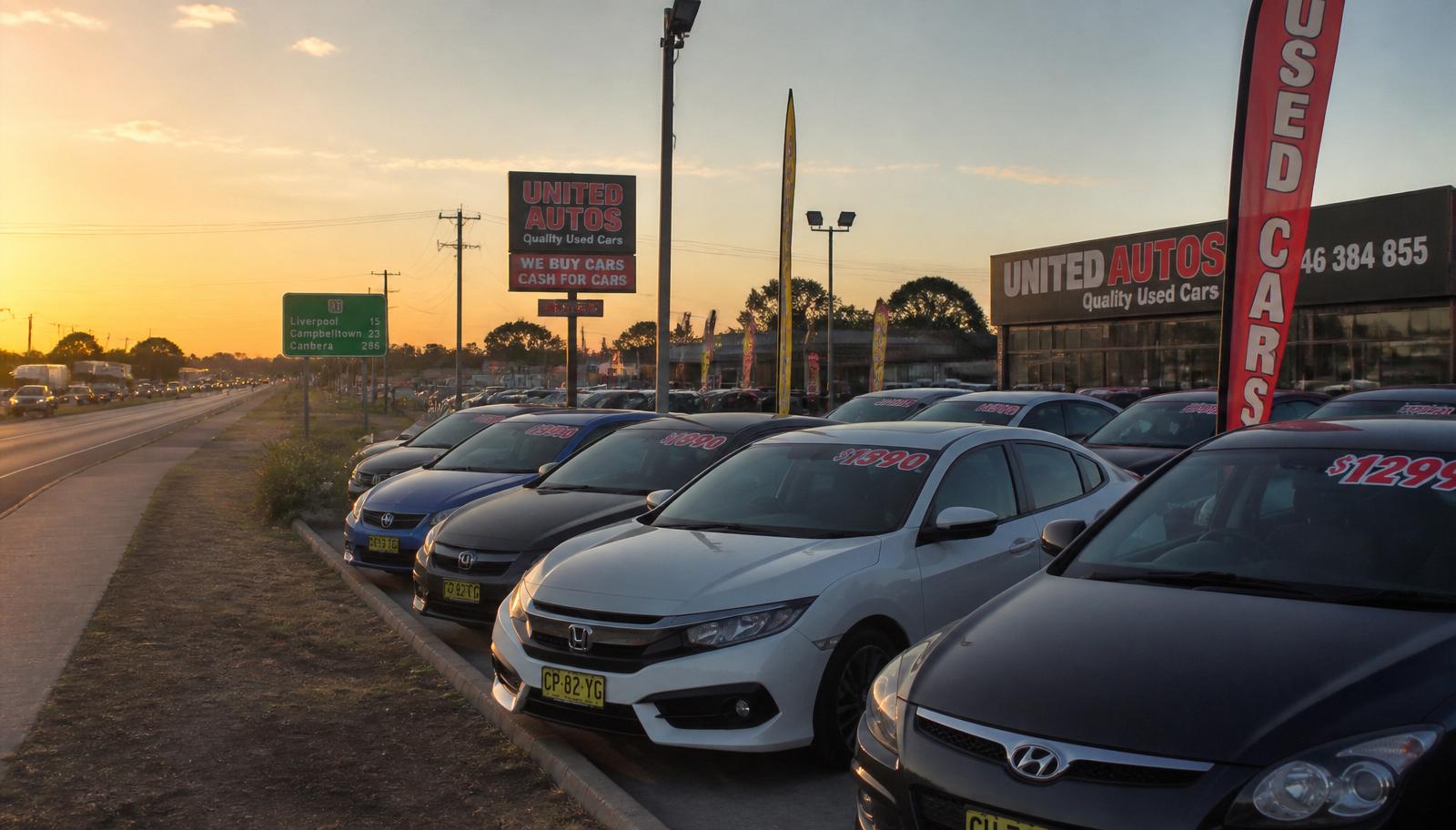
Drive the Hume Highway between Cabramatta and Liverpool and you pass one used-car yard after another. Lansvale (2166) sits in the middle of that corridor — a small suburb in the City of Fairfield, about 28 km south-west of the Sydney CBD, with an outsized share of the metro's used-car trade thanks to cheap highway frontage and forecourts deep enough to hold a full display line.
That concentration cuts both ways for a buyer. On the upside: choice, negotiating leverage, and the ability to look at three or four cars in one afternoon. On the downside, a share of the stock is auction-sourced with thin history, and the sales pressure on a highway strip runs harder than at a suburban dealership. If you are buying from a Lansvale yard, an independent inspection is the cheapest leverage in the whole transaction.
Why so many dealers cluster in Lansvale
It is not a coincidence. Three structural reasons pull dealers to this stretch:
- Hume Highway frontage — a used-car yard lives or dies on drive-by visibility, and this is one of the busiest arterial roads in south-west Sydney.
- Zoning and lot size — the industrial and mixed-use zoning around Lansvale, Warwick Farm and Chipping Norton allows the flat, deep forecourts a large display yard needs. You cannot fit that in Newtown.
- Proximity to the trade auctions — Pickles and Manheim are an easy run from here. A dealer who buys at auction early in the week can have the car on the Lansvale forecourt within days.
The third point is the one that matters to a buyer. A large slice of strip stock is not a private trade-in with local service history — it is ex-lease, ex-fleet, ex-hire or repairable-write-off bought at trade auction. The dealer is often the second or third owner in a very short window, and genuinely knows less about the car than the pitch implies. That is not dodgy; it is how the auction-to-retail pipeline works. But it means "we've had this one a while, it's a good little car" cannot be treated as a statement of fact.
The Lansvale dealer traps to know before you go
None of what follows is universal — plenty of dealers on this strip run clean businesses that survive on repeat customers. These are simply the recurring patterns our inspectors work around on a highway forecourt.
1. The 'freshly detailed' auction car
A car that arrived at the yard two days ago has been steam-cleaned, the engine bay dressed, the tyres shined, and rolled onto the front line. Nothing wrong with a clean car — but a mirror-finish engine bay makes it very hard to spot oil weeps, coolant seepage or a leaking cam cover with the naked eye, and a fresh cut-and-polish hides overspray edges and blend lines. This is where a paint-depth gauge and a proper cold-start diagnostic earn their money in ten minutes.
2. 'Statutory warranty' theatre
NSW dealers must provide a statutory used-car warranty on eligible vehicles under 10 years old and under 160,000 km — three months or 5,000 km, whichever comes first. Some salespeople present this as a premium feature: 'don't worry, it's covered by warranty.' It is not a feature, it is the legal minimum, and it excludes tyres, brake pads, batteries, wiper blades, exhausts past the manifold, and wear and tear generally. Read the exclusions before you accept it as reassurance.
3. The 'roadworthy is included'
NSW does not have a pre-sale roadworthy the way Victoria or Queensland do. A dealer offering 'a fresh eSafety check' is offering the annual registration inspection — a safety-only check of brakes, tyres, steering, lights and structural body. It does not check the engine, gearbox, ECU fault codes, transmission fluid, paint work or previous accident repair — which is to say, most of what you would actually want to know before spending five figures.
4. Finance pressure at the desk
Once you are on the finance form, the dealer's margin widens — finance commission, extended warranty and paint-and-fabric packages sit alongside the profit on the car itself. That is why 'take the car home tonight, sort finance tomorrow' is common. Slow it down. A short hold to arrange an independent inspection is a normal, reasonable request.
5. 'Sold as traded' loopholes
Cars over 10 years old or over 160,000 km are sold with no statutory warranty in NSW. Plenty of strip stock sits just above one of those thresholds. Always check the odometer against the ad — if the ad said 158,000 km and the car in front of you shows 161,400, the warranty has quietly gone.
What Lansvale does well (the fair side of the ledger)
It would be dishonest to only talk about traps. The strip has real advantages you do not get buying private:
- Choice in one afternoon — several yards within walking distance of each other, so you can shortlist rather than chase listings across the city.
- Written contracts — a licensed motor dealer contract is a stronger legal footing than a handwritten private receipt.
- Trade-in — a dealer will take your existing car in the same transaction, which removes the private-sale process entirely.
- Statutory warranty — even in its skinny form, it is more than a private seller gives you, which is nothing.
- Finance encumbrance is the dealer's problem — a licensed dealer selling a car with money owing on it is a compliance breach, so you are not inheriting someone else's loan.
The Lansvale inspection playbook — what our inspectors do on the strip
A yard inspection is a specific job. It is not the same as a driveway inspection where the seller made the car available all afternoon. On the strip you are working around other customers, sales pressure, and a car that has usually been standing since the last cold morning. Here is what we prioritise:
Cold start — the single most valuable 30 seconds
We ask the dealer not to warm the car up before we arrive. Start-up on a cold engine tells us more than any other test — piston slap, lifter tick, timing-chain rattle, turbo bearing whine, DPF regeneration state, injector knock, and blue or white smoke are all easiest to hear and see in the first twenty seconds after key-on. If the car is already warm when we arrive, that is a soft flag; we can still inspect, but the best diagnostic window of the day has gone.
OBD-II live data + full DTC pull
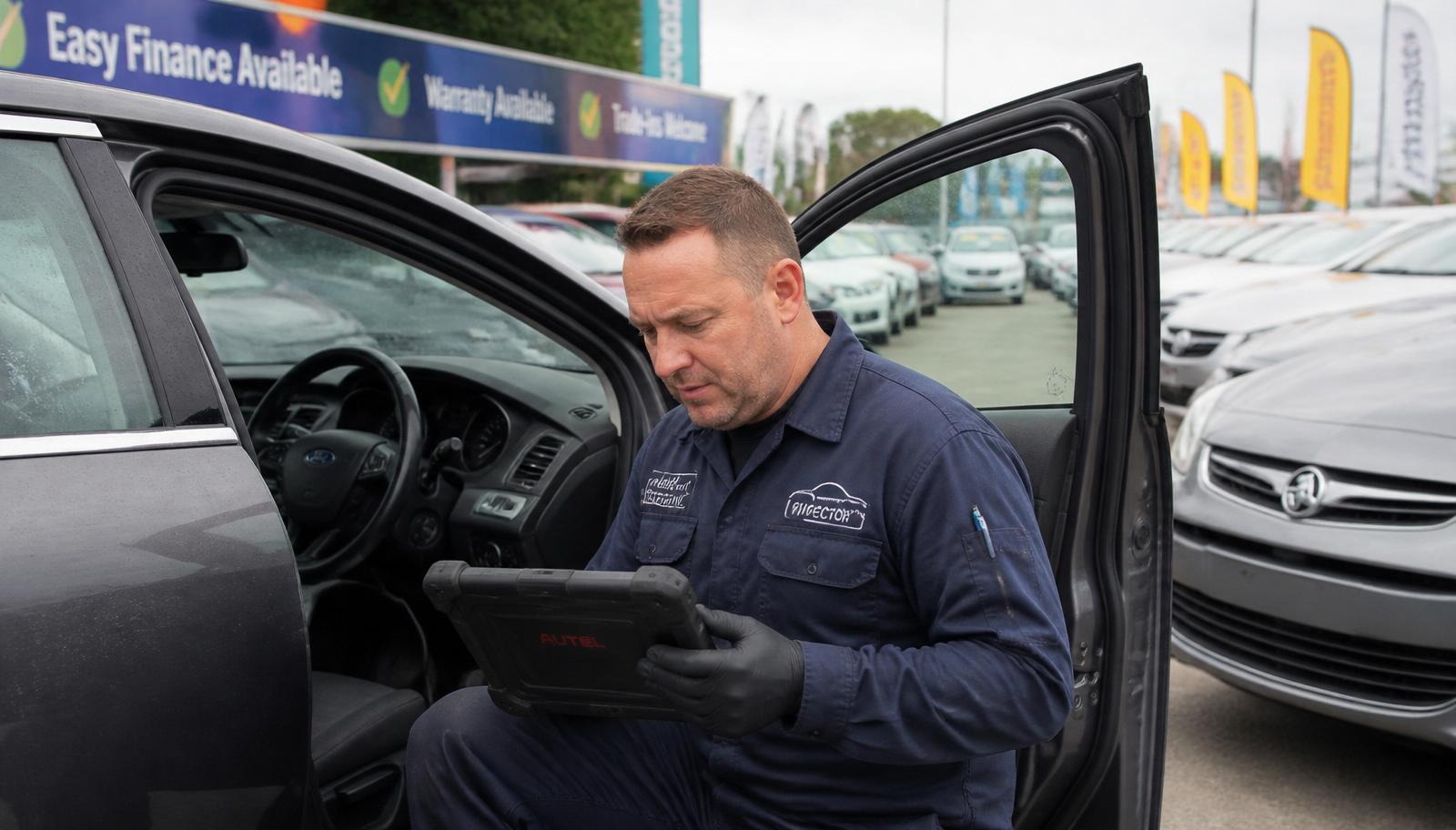
We plug a scan tool into every car — not just the engine module, but transmission, ABS, SRS (airbag), body and, where fitted, hybrid/EV modules. We are looking for current fault codes, permanent codes, pending codes, freeze-frame data and readiness monitors. The last one is the sneaky one: a car with all monitors freshly reset means the ECU was cleared very recently. That is either a repair the dealer has not mentioned, or a wipe hiding a code that will return.
Paint depth on every panel
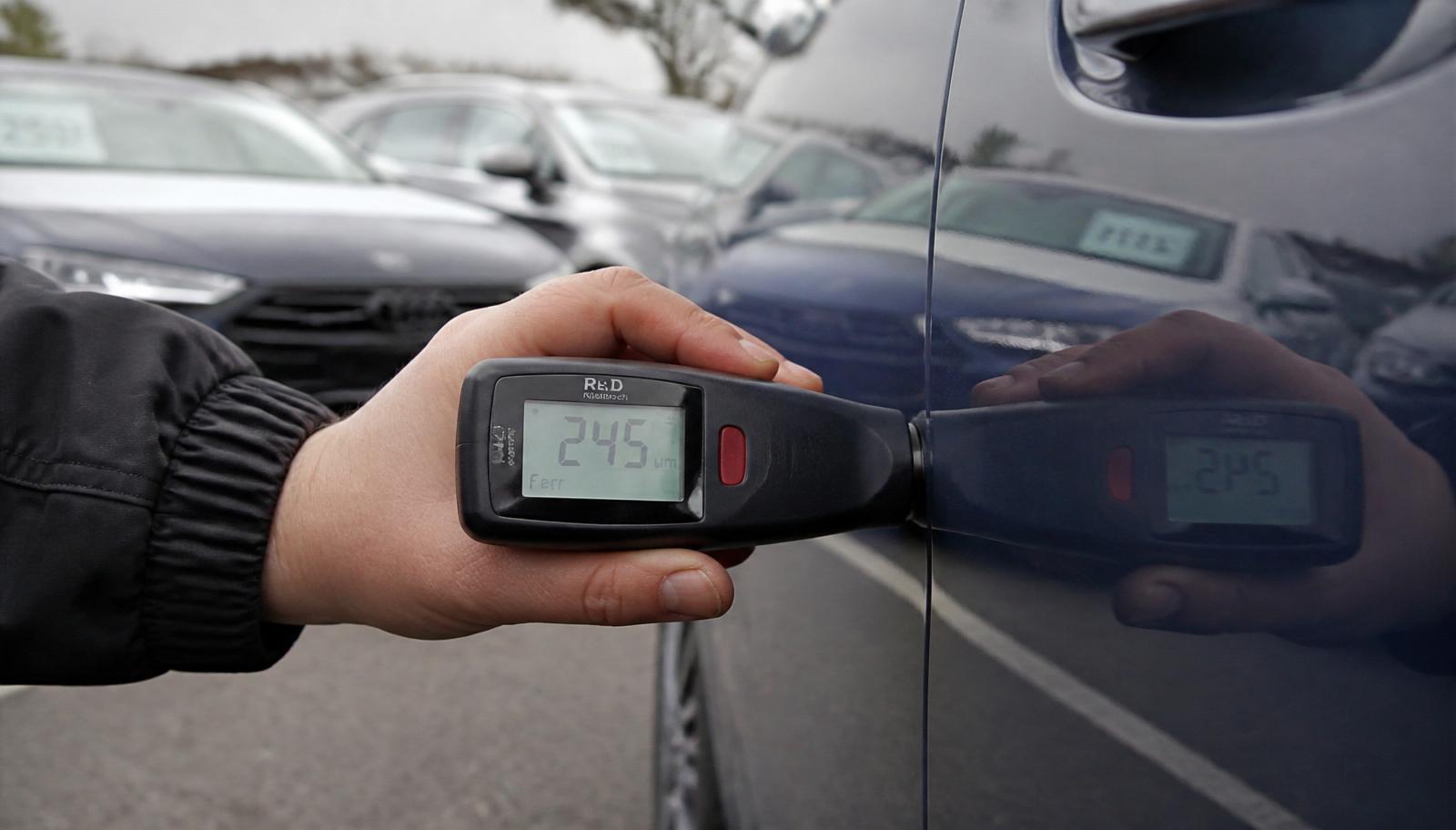
Factory paint is applied to a consistent depth, so the diagnostic value is in comparison rather than any single number: a repainted panel reads higher than its neighbours, and body filler higher again. We scan every panel, record the readings, and read the panels against one another — one high panel is a stone-chip touch-up or a car-park scrape, a whole side reading high is previous collision repair. This is the check that catches accident history a free registration check will never show you.
Underbody and structural
We go under the car with a torch. On this corridor we look specifically for salt-air corrosion on vehicles that have lived near the coast and been trucked west for auction, kerb-strike damage to control arms and lower sway-bar links, and repaired-and-painted chassis rails — the telltale of heavy collision work rectified just far enough to pass through trade auction.
Transmission behaviour under load
On the road test we run three checks that no forecourt has room for: full-throttle upshift under load (flare or slip), coast-down downshift (harshness), and a stop-start cycle in traffic (CVT judder or dual-clutch low-speed stutter). The Hume and the M5 are right there, so a proper loaded road test is available whenever the seller agrees to one. If the dealer will not let the car leave the yard, the report says so rather than implying the car was driven.
The 'why did they sell it' question, answered by data
Every used car has a reason it was sold. Sometimes it is genuine — an upgrade, a downsize, a family change. On the auction-to-forecourt pipeline it is often mechanical: the previous owner or fleet manager knew something. The inspection is built to find that reason. If we cannot find one, that is a good sign. If we can, that is your negotiating lever.
The Lansvale checklist you should walk in with
Before you leave home
- Free Service NSW registration check — plate number, confirm status and expiry.
- PPSR check at ppsr.gov.au for finance owing, written-off and stolen records. Take the VIN from the ad or from a photo of the compliance plate.
- Screenshot the ad, the asking price and the claimed odometer. That is your evidence if anything changes at the yard.
- Book your independent pre-purchase inspection. A dealer who will not hold the car long enough for one is telling you something.
On the forecourt
- Do not let the salesperson start the car before you arrive. Ask them, politely, to leave it cold.
- Photograph the odometer, the VIN plate (usually the driver's door jamb) and the dashboard.
- Cross-check the odometer against the online ad — even a small jump can change the warranty position.
- Ask for the service book. No service book is a data point, not automatically a deal-breaker.
- Ask, in writing on the sales order: 'sale conditional on pre-purchase inspection with no major faults'.
In the contract
- Confirm whether the statutory warranty applies — check age and kilometres against the thresholds.
- Watch for 'sold as-is' or 'as inspected' clauses on borderline-eligible cars. These attempt to waive the statutory warranty and are much easier to prevent than to fight afterwards.
- Get the finance quote and the cash price side by side, so you can see where the margin sits.
- Treat paint and fabric protection as an optional extra, not a requirement — price it on its merits.
- Extended warranty: read the exclusions list before signing. Many exclude the exact expensive failures (CVT, DPF, turbo, dual-clutch) you would want covered.
The failure modes we look hardest for on the strip
| Failure | How we find it |
|---|---|
| Previous accident repair not disclosed | Paint-depth scan on every panel, panel-gap and fastener check, underbody rail inspection |
| Recently cleared fault codes hiding a persistent issue | OBD-II readiness monitors, pending and permanent DTC pull, freeze-frame data |
| Worn CVT or dual-clutch transmission | Loaded throttle test, fluid condition, transmission module scan |
| Blocked DPF or a diesel stuck in regeneration | Live data: DPF differential pressure, soot and ash load, regeneration history |
| Odometer inconsistency | ECU odometer cross-check against the cluster, service records and physical wear patterns |
How our Lansvale inspections work
We are mobile — we come to the dealership. You do not need to be there in person, though many buyers join by phone or video during the road test. Same-day or next-day inspection appointments, subject to availability.
- Essential ($199) — safety and mechanical condition check, OBD-II scan, brake and tyre life per corner, battery and charging test, road test where permitted, written photo report the same day.
- Comprehensive ($329) — everything in Essential plus a full mechanical, electrical, interior, body and underbody assessment, multi-module ECU scan, PPSR history report, an odometer rollback check where supported through the scanner (some vehicles do not support it), and the report finished on site before the inspector leaves.
- Elite ($449) — everything in Comprehensive plus a senior inspector, paint-thickness readings on every panel, cold-start assessment and a findings summary written for negotiation. EV and hybrid battery health testing is a $199 add-on to any tier.
Elite carries our written missed-fault repair cover: if we clear a car and a major fault we should have detected shows up within 30 days, we contribute up to $3,000 toward the repair. Essential and Comprehensive do not include this cover. It is not a warranty on the car — it is accountability on the inspection.
What we cover around Lansvale
The same flat price applies across Greater Sydney, with no travel surcharge, so the neighbouring dealer suburbs are covered on the same terms:
Common questions
Can you inspect a car at a Lansvale dealer?
Yes — the service is mobile, so the inspector attends the forecourt where the car is standing. Same-day or next-day inspection appointments, subject to availability. Call 02 8320 1246 or book online.
Do I need to be at the dealership during the inspection?
No. Most buyers give us the yard address, the dealer contact and the car details, and we handle it end to end. You get the written photo report and a call from the inspector. Many buyers join the road test by phone or video instead of attending.
The dealer says the car has already been checked by their own mechanic — is that enough?
No. The dealer's mechanic is engaged by the dealer. An independent pre-purchase inspection is the only mechanical opinion commissioned by you, the buyer, and the only one written without a sale riding on the outcome. A dealer who believes the car is clean has no reason to object to a second opinion.
Which inspection tier suits a Lansvale dealer purchase?
Comprehensive ($329) is the usual choice for a forecourt car, because it adds the full mechanical, body and underbody assessment, a multi-module scan and the PPSR history report — which is where undisclosed repair history normally surfaces. Elite ($449) adds a senior inspector, paint-thickness readings on every panel and a cold-start assessment, and suits EVs, prestige and anything you plan to keep long term. Essential ($199) covers a straightforward, lower-value buy.
What happens if you find something serious?
You get the finding in writing with photo evidence, a call from the inspector to walk through how severe it is, and a stated verdict. What you do with it is your call — most buyers either renegotiate or walk. The report is written so it can be handed straight to the salesperson.
Do you inspect cars at auction as well as retail yards?
Yes — Pickles and Manheim are both regular sites for us. An auction inspection is a different job: access is limited and there is normally no road test, so tell us at booking that the car is in an auction lot rather than on a forecourt.
Is a fresh eSafety check the same as a pre-purchase inspection?
No. An eSafety (pink slip) check is the annual registration inspection — brakes, tyres, steering, lights, structural body. It does not assess engine condition, gearbox behaviour, stored fault codes, transmission fluid, paint depth or previous accident repair. It confirms the car can stay registered; it does not tell you whether it is a good car.
Book your Lansvale inspection
Mobile inspection across Lansvale, Cabramatta, Warwick Farm, Liverpool and the wider south-west Sydney dealer corridor. Same-day or next-day appointments, subject to availability. The report is finished on site on Comprehensive and Elite, and the same day on Essential. From $199, with repair cover up to $3,000 within 30 days on missed major faults (Elite only).
Or call 02 8320 1246. If you are on the forecourt right now with a salesperson looking over your shoulder, step away and make the call before you sign anything.
Lock in your inspection
Book a mobile pre-purchase inspection at the seller's address. Same-day slots across Sydney from $199, with a written repair cover on Elite (30 days / up to $3,000).
Mobile inspections near you