
Before You Pay the Deposit: 7 Things Every Sydney Buyer Must Do in the 48 Hours Before Signing
About to pay a deposit on a used car in Sydney? Don't — not yet. Here's the 48-hour checklist our inspectors give every buyer: PPSR, identity, VIN search, independent inspection, recalls, finance, and what your deposit actually means legally in NSW.
You've found the car. It looks right. The seller seems reasonable. You've done a test drive and nothing obvious is wrong.
Now they want a deposit to hold it while you "think about it."
Stop.

The 48 hours before you hand over any money is the highest-leverage window in any used car purchase. What you do — or don't do — in this window determines whether you buy a good car or inherit someone else's problem. This is the exact checklist our inspectors tell every buyer before they commit.
First: the "deposit to hold" myth
Sellers — particularly private sellers — often ask for $200–$500 to take the car off the market while you arrange an inspection or finance. It feels reasonable. It isn't.
In NSW, a deposit paid to a private seller has almost no legal protection. If the seller changes their mind and keeps your money, your only recourse is NCAT — and most buyers don't bother for under $500. Sellers know this.
More importantly: a seller who won't let you inspect the car before committing money is telling you something. A legitimate seller with a legitimate car welcomes an inspection. Resistance — or urgency around a deposit before inspection — is one of the clearest red flags in the used car market.
Step 1: Run the PPSR before you do anything else
The Personal Property Securities Register is the national database that records:
- Outstanding finance (money still owed to a bank or finance company)
- Written-off vehicles (repairable and statutory write-offs)
- Stolen vehicle reports
- Encumbrances (other liens on the vehicle)
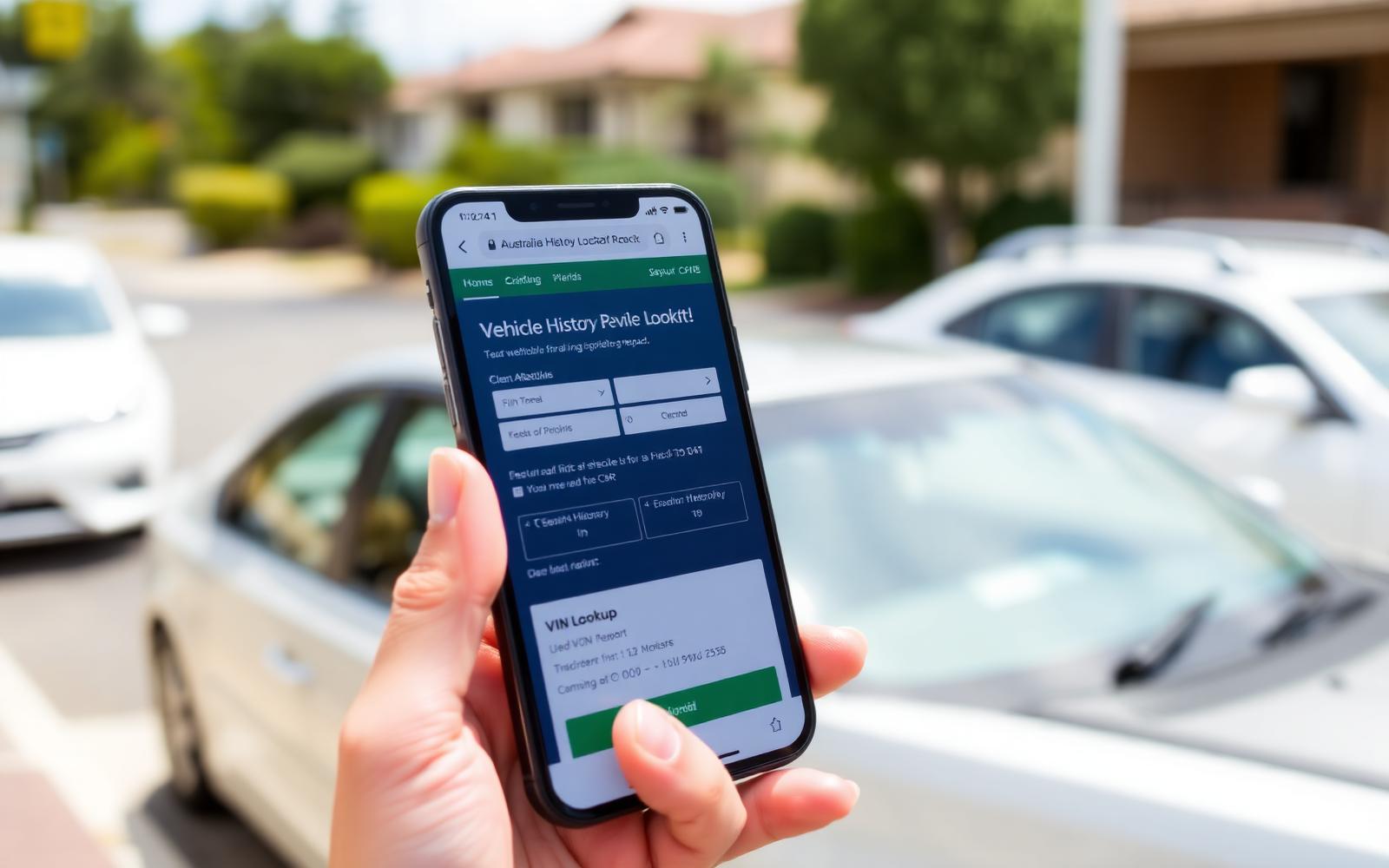
Run it at ppsr.gov.au. You need the VIN (17-character vehicle identification number, found on the compliance plate in the engine bay or driver's door jamb).
If the PPSR shows finance owing
The car legally belongs to the finance company until the debt is cleared. Buying it doesn't clear the debt — it transfers with the car. The lender can repossess the vehicle from you even though you paid the seller in full. Walk away unless the seller can show a discharge letter from the lender.
If the PPSR shows a write-off
A repairable write-off can legally be re-registered in NSW after inspection, but it's worth significantly less and may have structural issues. A statutory write-off cannot legally be re-registered. Either way: get an inspection, renegotiate the price, or walk.
Step 2: Verify the seller's identity matches the rego papers
Ask to see:
- The vehicle's current registration certificate (or confirmation from Service NSW)
- The seller's photo ID (driver's licence)
- Proof that the name on the rego matches the person selling you the car
If the car is registered to someone else — a partner, parent, company — get a written explanation of why and ensure the actual registered owner signs the transfer documents. In NSW, a sale by a non-owner is legally complicated and can void your protection under the Australian Consumer Law if it's a private arrangement.
Step 3: Search the VIN across multiple platforms
The PPSR tells you about financial and legal encumbrances. It doesn't tell you if the same car has been listed six times in the last year at progressively lower prices, or if it appeared on Facebook Marketplace two months ago described as "recently repaired after minor collision."
Search the VIN on:
- Carsales (past listing history sometimes surfaces)
- Facebook Marketplace (past listings via the VIN or a reverse image search on the photos)
- CarHistory or AutoRecord (paid reports that compile historical listing data, odometer readings from past CTP insurance submissions, and some service history)
- Google (VIN in quotes — you'd be surprised what surfaces)
A CarHistory report ($30–$35) often returns odometer readings from previous registration renewals, which is one of the most reliable ways to catch a clocked car. If the registration history shows 143,000km at the last renewal and the car now shows 89,000km, the conversation is over.
Step 4: Book an independent inspection — before the deposit, not after
This is the step most buyers either skip or sequence wrong.
The inspection isn't a formality after you've mentally decided to buy. It's the decision itself. A pre-purchase inspection is the only way to know — not believe, not hope — what you're actually buying.
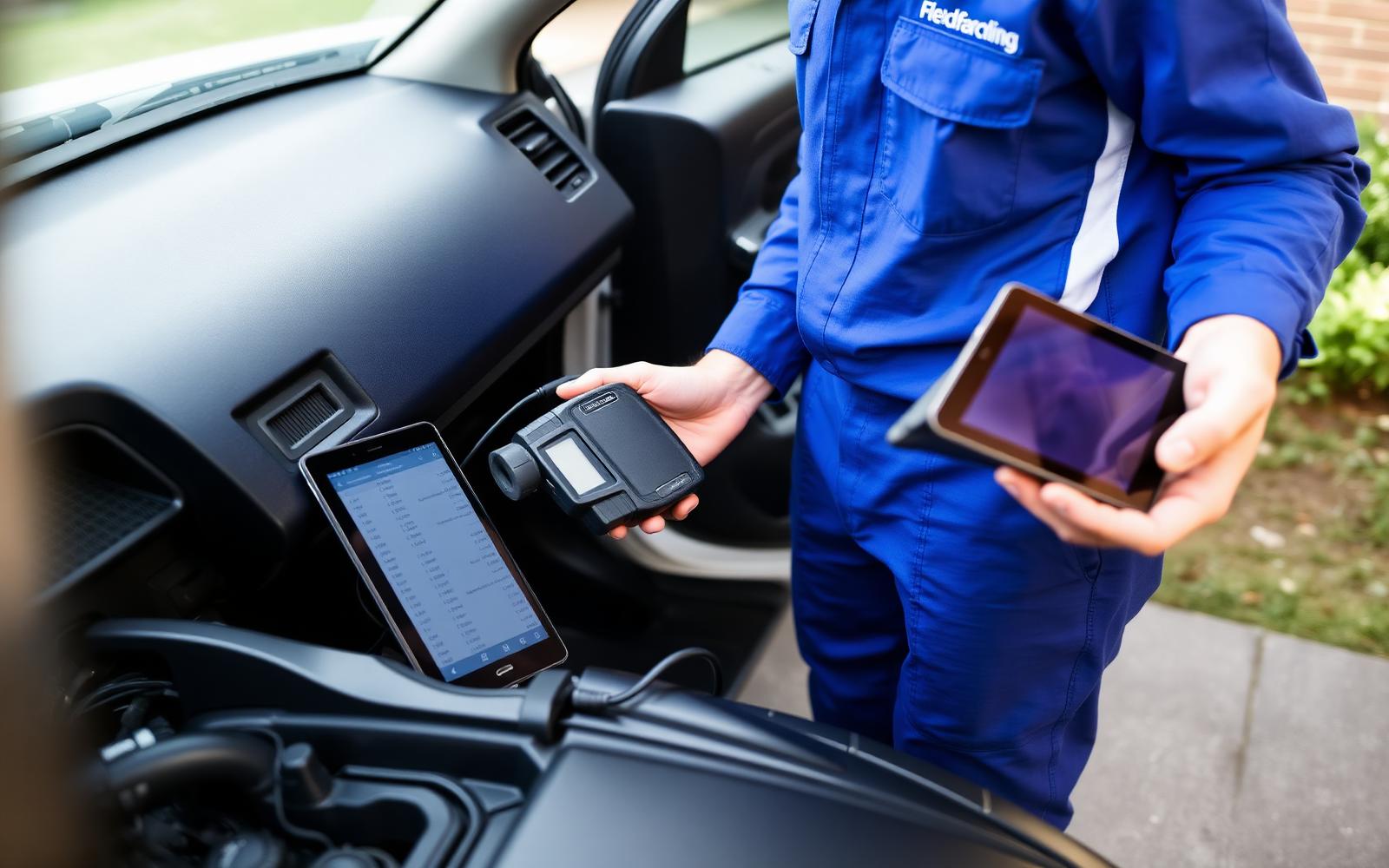
What a professional mobile inspection covers that you can't do yourself
- OBD-II diagnostic scan — pulls stored and pending fault codes the seller may have cleared before the test drive
- Paint thickness measurement — identifies repaired panels from accident damage that looks perfect to the naked eye
- Undercarriage inspection — rust, chassis damage, leaks, worn bushes and suspension components that are invisible without getting underneath
- Hybrid battery data (if applicable) — state of health, cell balance, cycle count history
- Compression and leak-down test — engine health that a test drive cannot assess
- Transmission behaviour under load — gearbox faults that only appear when the car is warm and under driving conditions
At Aussie Auto Care, we come to the seller's address across Greater Sydney — you don't need to move the car. Reports land instantly on-site for Comprehensive & Elite — or same-day for Essential — with full photographs and a Buy / Think Twice / Avoid call from the inspector.
Step 5: Check for outstanding recalls
Vehicle recalls are safety-critical repairs that manufacturers are legally required to offer at no cost to the owner. They don't expire when the car is sold. An unaddressed recall is the next owner's problem.
Check the VIN against:
- Product Safety Australia (productsafety.gov.au) — the ACCC's national recall database
- Toyota, Mazda, Hyundai etc. recall portals — most manufacturers have a VIN lookup tool on their Australian websites
The most significant ongoing recall in the Australian used car market is the Takata airbag recall, which is still surfacing on some older vehicles. An airbag inflator that ruptures at deployment doesn't just fail — it fires shrapnel into the cabin. Check every car.
If a recall is open and unaddressed, it's a negotiation point at minimum — the dealer or seller should organise the remedy before settlement, or reduce the price to account for the fact that you'll need to book it in.
Step 6: Get finance pre-approved before you negotiate
Most Sydney buyers who finance a used car do it through the dealer. That is almost always the most expensive way to borrow.
Dealer finance is a profit centre. The interest rate markup — the difference between what the lender actually offers and what the dealer charges you — goes straight to the dealer's bottom line. On a $25,000 car over 5 years, a 3% rate markup adds $1,900–$2,100 in extra interest.
What to do instead:
- 1.Apply for pre-approval from your bank or a credit union before you start negotiating. Most will give a conditional approval in 24–48 hours.
- 2.Walk into the negotiation knowing your approved rate and your maximum borrowing amount.
- 3.If the dealer offers finance, compare it directly to your pre-approved rate — number to number, not monthly repayment to monthly repayment (monthly repayments can be made to look attractive by extending the loan term).
Pre-approval also means you know your real budget before you fall for a car $8,000 above what you can afford, which is the other thing dealer finance enables.
Step 7: Understand what your deposit actually means legally in NSW
If you do decide to leave a deposit — whether to a private seller or a dealer — understand what it does and doesn't protect.
Private sale
A deposit is legally a part-payment on a contract. If you pull out after paying a deposit, the seller may be entitled to keep it — particularly if the car was genuinely held for you. Equally, if the seller sells the car to someone else after accepting your deposit, they're in breach of contract and you're entitled to a refund plus potentially damages.
Dealer sale
Under the Australian Consumer Law, dealers must honour statutory warranties. A deposit to a licensed dealer is stronger than a private deposit — if the car has a major defect that wasn't disclosed and wasn't obvious during inspection, you have recourse.
One more thing: Get a signed receipt for any deposit. It should state the amount, the date, the car's VIN, the seller's name and contact details, and what happens to the deposit if the inspection reveals a major fault. A verbal agreement is worth nothing.
The 48-hour timeline
Here's how to sequence everything:
| Hour | Action |
|---|---|
| 0 | Test drive. Like the car. Don't commit. |
| 0–1 | Run the PPSR check on your phone before you leave |
| 1–2 | Cross-reference VIN on Carsales, Facebook, CarHistory |
| 2–3 | Book the inspection — choose your tier, lock in the time |
| 2–3 | Contact your bank for finance pre-approval if needed |
| 24–48 | Inspector attends; Comprehensive & Elite reports delivered instantly on-site, Essential same-day |
| 48 | Read the report. Negotiate on findings, or walk away clean |
| 48+ | If proceeding: pay deposit with signed receipt, arrange rego transfer |
PPSR plus a CarHistory report cost well under $50 combined, and the inspection is $199–$329. On a $20,000 car, that's around 1.5% of the purchase price spent on knowing exactly what you're buying.
Common questions
Can I get an inspection on the same day I find the car?
Yes — if you book before 11am we can usually attend the same day across most of Greater Sydney. Call 02 8320 1246 for urgent turnarounds.
What if the inspection finds something serious?
You have three options: walk away (full control, no deposit lost if you haven't paid one), negotiate the price down based on the repair cost estimate in the report, or ask the seller to fix the fault before settlement. Our inspectors include specific repair cost estimates in every report for exactly this reason.
The seller is "getting other offers" and wants a decision now.
This is the oldest pressure tactic in used car sales and it is effective precisely because it's sometimes true. The answer is: a legitimate car and a legitimate seller will still be there in 24 hours. If the seller won't allow 24 hours for an inspection, the urgency is manufactured — and the reason for that urgency is usually in the inspection report.
Do I need to be present at the inspection?
No. You provide us the seller's address and a time that works. We attend, inspect, and send the report directly to you. We'll also call you to walk through the findings.
What if I've already paid a deposit and then booked the inspection?
Get the inspection done. If it reveals a major fault that wasn't disclosed, you have grounds to demand your deposit back — and in most cases sellers comply when faced with a written professional report. If they refuse, NSW Fair Trading is your first call.
The bottom line
The 48 hours before a deposit is the only window where you have full leverage and zero commitment. Most buyers rush it. The ones who don't — who run the PPSR, verify the seller, search the VIN, book the inspection, and understand their legal position — buy good cars at fair prices or walk away from problems before they become their problem.
An inspection doesn't guarantee a perfect car. It guarantees you know exactly what you're buying before you hand over your money.
Lock in your inspection
Book a mobile pre-purchase inspection at the seller's address. Same-day slots across Sydney from $199, with a written repair cover on Elite (30 days / up to $3,000).
Mobile inspections near you