
Odometer Fraud in Australia: How to Detect a Clocked Car Before You Buy
Odometer fraud is one of the most common — and most expensive — ways used-car buyers in Australia get caught. Here's exactly how to detect a clocked car before you buy, and what a professional inspection uncovers that a PPSR check misses.
Odometer tampering is one of the oldest tricks in the used-car trade and consumer regulators across Australia continue to receive complaints about it every year. Most buyers who get caught only realise after the car is in their driveway and the engine sounds older than the dash claims.
A rolled-back odometer is one of the oldest tricks in the used-car business, and it's still surprisingly common. A seller who shaves 100,000km off a vehicle's dials can pocket an extra $4,000–$12,000 depending on the make and model. The buyer gets a worn engine, tired suspension and timing-chain grief — on a car the listing said had "only 78,000km."
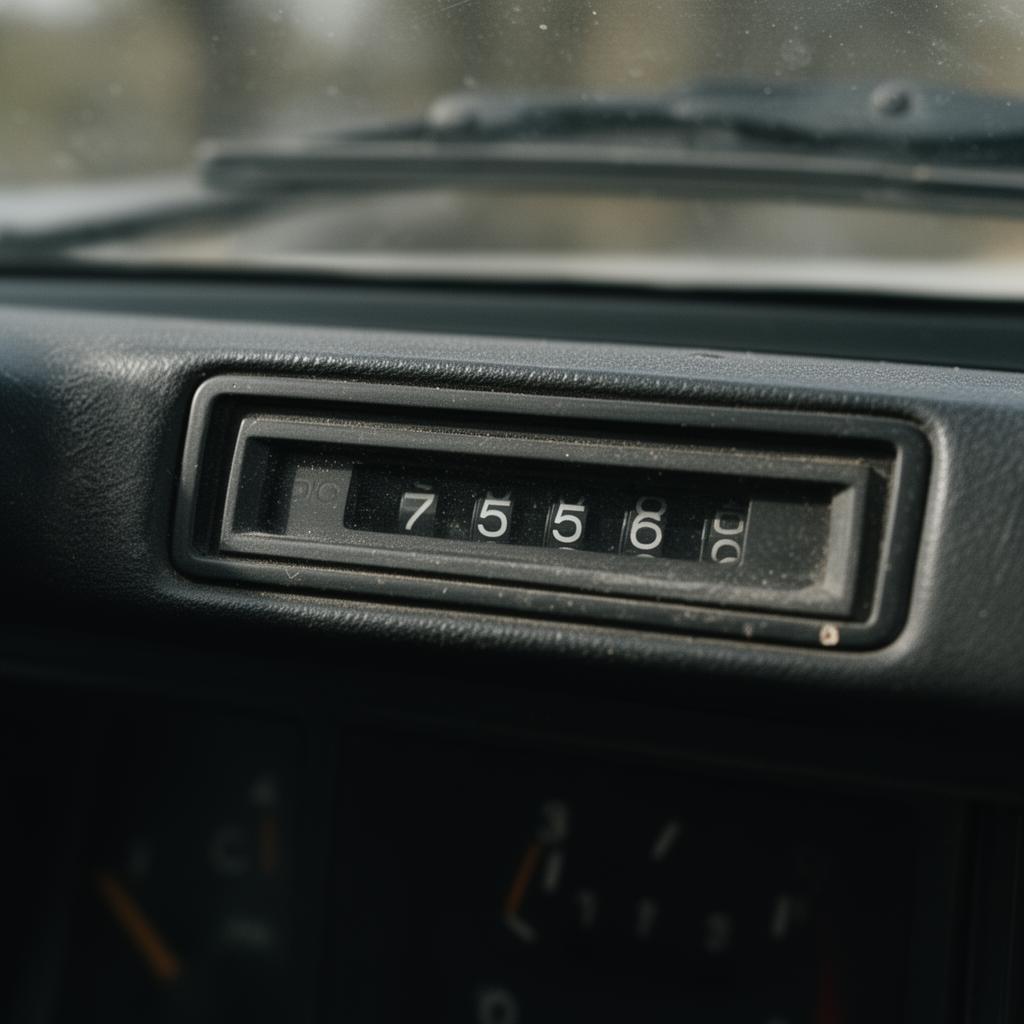
Here's how to spot it before you sign.
What is odometer fraud (clocking)?
Odometer fraud — also called "clocking" — is the deliberate rolling back or tampering of a vehicle's odometer to display a lower kilometre reading than the car has actually travelled.
In Australia it is a criminal offence under consumer law in every state and territory. Under the Australian Consumer Law (Schedule 2, Competition and Consumer Act 2010), misrepresenting a vehicle's mileage is a false or misleading representation — and the seller can face fines, prosecution, and liability for your repair costs.
It doesn't stop people doing it.
How common is it in Australia?
There's no mandatory national database tracking odometer discrepancies in Australia (unlike some US states), which makes precise figures hard. What we do know — from PPSR records, state fair-trading complaint data and our own pre-purchase inspection findings — is that it's common enough that every Sydney buyer should treat the dashboard reading as a claim to be verified, not a fact.
Weekly
Suspected odometer discrepancies our inspectors flag on used cars in Sydney
$4K–$12K
Typical inflated price a clocked car commands over its true value
High-risk categories from our inspection data:
- Ex-fleet and ex-hire vehicles (often from interstate)
- High-kilometre utes and 4WDs — HiLux, Ranger, Patrol
- Diesel SUVs sold privately through Facebook Marketplace
- Grey imports with foreign service records
- Vehicles that have changed hands three or more times
How clocking works in 2026
Old-school clocking involved mechanical tampering with the speedo cable. Modern vehicles are harder — but not impossible.
Digital odometer rollback tools
Diagnostic tools originally designed for legitimate purposes (like replacing instrument clusters) can write new values to a vehicle's ECU. For under $500 on grey-market sites, anyone can buy a device that reprograms the odometer across multiple control units simultaneously.
Partial resets
Some sellers don't reset to a tidy number — they roll back just enough to slip under a pricing threshold (e.g., bringing 142,000km down to 98,000km to avoid the "over 100k" discount buyers automatically apply).
Interstate arbitrage
A vehicle with 180,000km in Queensland gets clocked to 90,000km, relisted in NSW. The PPSR won't show the discrepancy because odometer readings aren't recorded in PPSR — only finance, theft and write-off status.
8 ways to detect a clocked car
1. Pull a full PPSR and vehicle history report
The PPSR itself doesn't record odometer readings, but combined reports from services like CarHistory or AutoRecord sometimes capture readings from previous CTP insurance records, fleet management systems, or service checks.
If the history report shows a reading of 143,000km eighteen months ago, and the car now shows 91,000km, you've caught it.
Cost: $2–$35 depending on the service. Do it before you inspect anything.
2. Check service stamp consistency
Open the logbook. Every stamp should record the odometer reading at the time of service. Add them up — the intervals should make mechanical sense. A car with stamps at 10,000 / 20,000 / 30,000 / 40,000km that now reads 68,000km but has worn interior trim consistent with 160,000km is waving a red flag.
What to look for in the logbook
- Stamps with no odometer reading recorded (deliberate omission)
- Correction fluid or overwriting on odometer fields
- Gaps in the service history that can't be explained
- Service intervals that suddenly jump (e.g., 10k to 55k with one stamp)
3. Inspect wear relative to the stated kilometres
This is one of the most reliable physical checks — and exactly what our inspectors do on every booking.
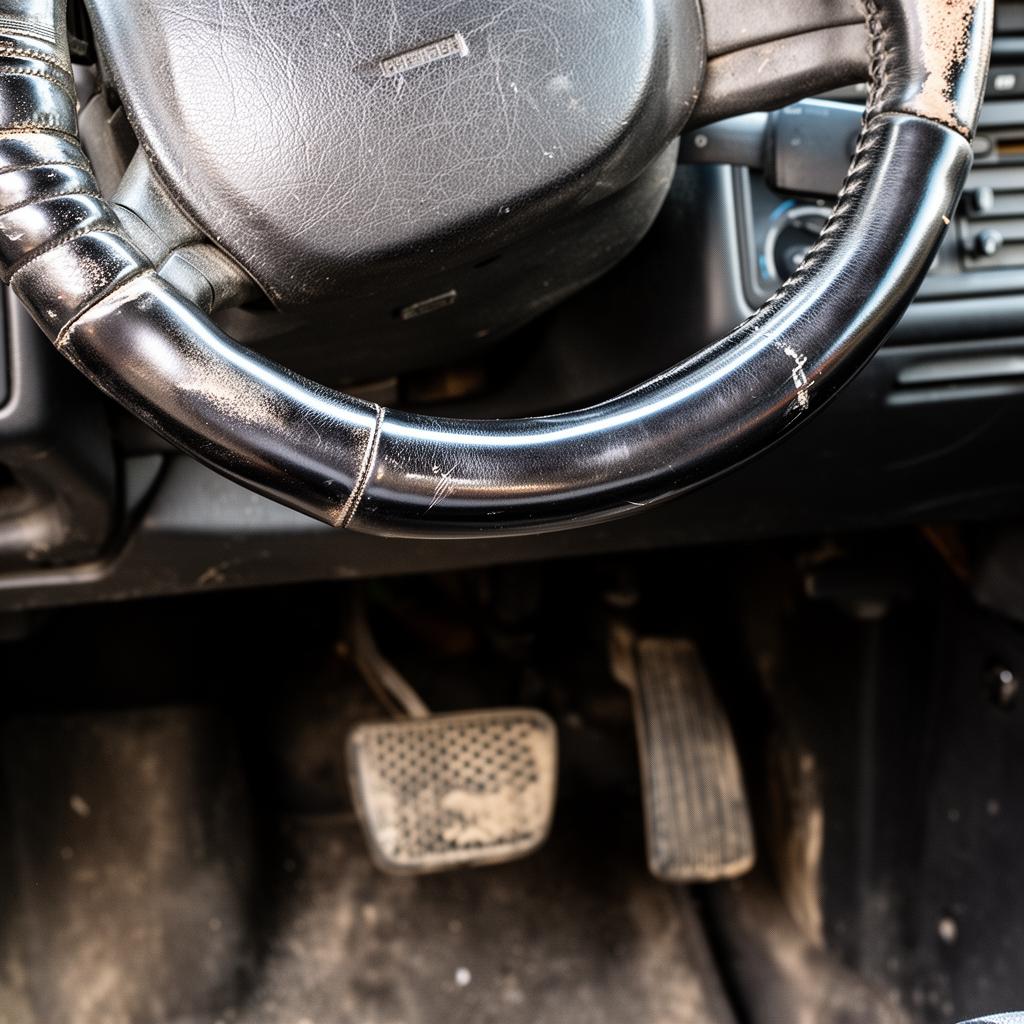
- Steering wheel: Leather or urethane wears through at the 3 and 9 o'clock grip positions. On a genuine 60,000km car the grip texture should still be sharp. At 160,000km it's typically polished smooth.
- Pedal rubbers: The brake and clutch pedal rubbers wear fastest. A car claiming 65,000km with pedal rubbers worn flat is almost certainly clocked.
- Driver's seat bolster: Left-side bolster wear is driven by in/out movement, not kilometres — but on a "low-km" car it should still look relatively intact.
- Door sill scuff plates: Painted or plastic sill plates get scratched by shoes every time someone exits. Genuine low-km cars often still show paint or logo detail.
4. OBD-II diagnostic scan — live data doesn't lie
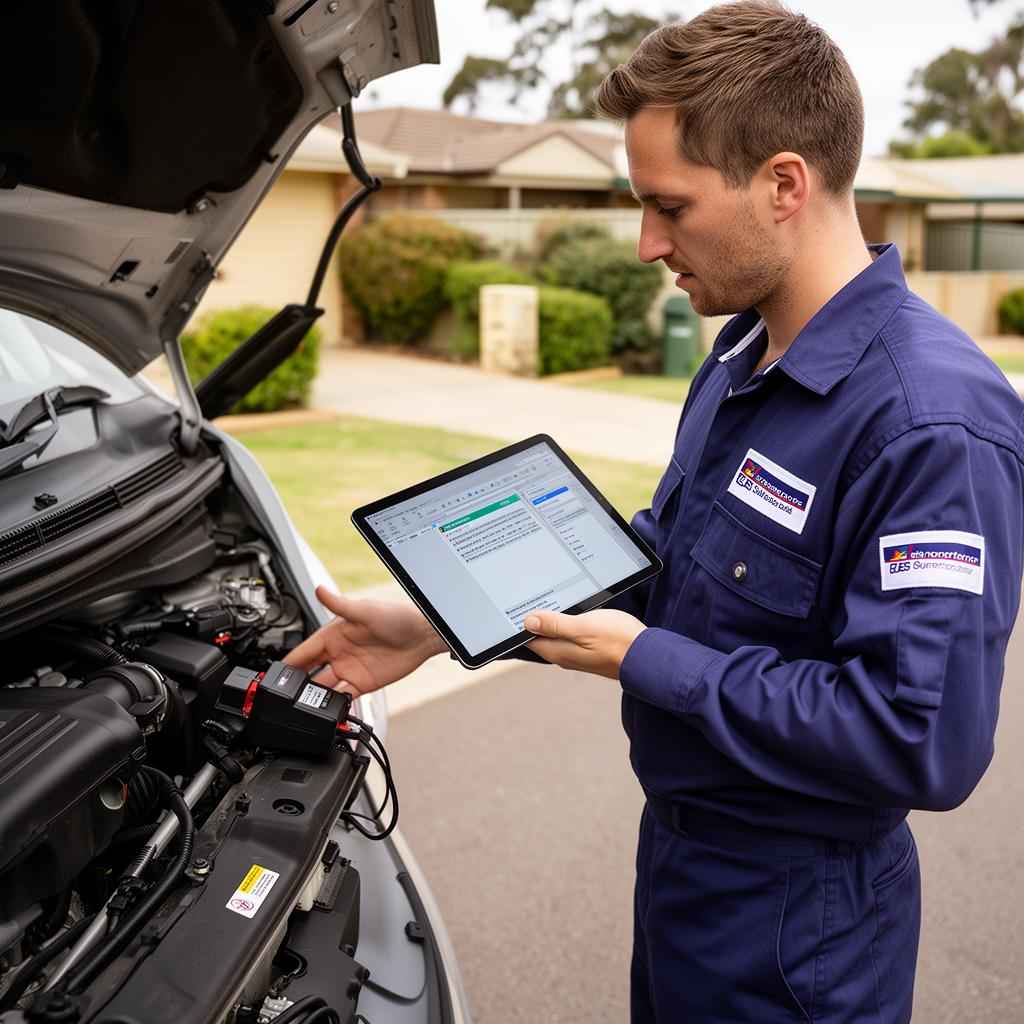
Modern vehicles store total engine runtime (hours) and sometimes lifetime fuel consumption in the ECU, independent of the instrument cluster display. A qualified inspector with a professional-grade scanner — not the $20 Amazon reader — can pull this data.
An odometer showing 72,000km on a car whose ECU reports 8,400 hours of engine runtime is mathematically impossible unless the car was used exclusively in parking stations.
5. Check tyre age and brand vs stated kilometres
If a car genuinely has 55,000km on it, there's a reasonable chance it's still on original tyres, or just had its first set replaced. If the tyres are brand new — particularly all four at once — ask why.
Sellers sometimes replace worn tyres before a sale to make a high-km car appear younger. Check the tyre manufacture date (the four-digit DOT code on the sidewall gives you week and year). Tyres made in week 12 of 2022 on a car listed as a "low-km 2021 model" that "barely left the driveway" is worth a conversation.
6. Inspect brake disc wear
Brake discs develop wear ridges on the outer edge (where the pad doesn't contact) proportional to use. On a genuinely low-km vehicle, the disc surface should be relatively smooth across the full swept area. Heavy wear ridges on a car claiming under 80,000km indicates actual use well beyond that.
7. Cross-check with manufacturer service data
Toyota, Mazda, Subaru, Hyundai and Kia all maintain dealer service records in their national systems. If the car has been serviced at authorised dealers, those records often include odometer readings. Ask the seller for consent to request the service history from the manufacturer's portal — a legitimate seller will have no objection.
8. Get a professional pre-purchase inspection
A trained inspector sees odometer fraud indicators every week. It's pattern recognition built over thousands of vehicles — your brain can't match it on a single purchase.
Our inspectors cross-reference physical wear, ECU data, service history and PPSR in a single visit. We include an explicit odometer integrity assessment in every report, with a Buy / Think Twice / Avoid recommendation.
Red flags in the listing itself
Before you even call the seller, the listing can tip you off:
- No logbook ("lost the service history") on a common Japanese brand that's typically dealer-serviced
- Priced conspicuously below similar-km examples — someone needs to recover the money they spent on clocking
- Reluctance to allow an inspection or "another buyer is coming tomorrow" pressure
- Photos cropped tightly to avoid showing odometer, pedals or steering wheel
- Multiple relisting — same VIN appearing across platforms over time at suspiciously stable pricing
What to do if you've already bought a clocked car
If you discover after purchase that the odometer was tampered with:
- 1.Do not modify the car — preserve evidence.
- 2.Report to NSW Fair Trading (or your state equivalent) and the ACCC.
- 3.Contact your solicitor — you have a right to rescission (unwinding the sale) and damages under the Australian Consumer Law.
- 4.Keep all documentation — the listing screenshots, your purchase contract, and the inspection report if you had one.
The bottom line
Odometer fraud is common, hard to spot with the naked eye, and expensive to discover after the purchase. The checks above give you a solid foundation — but nothing replaces 75 minutes of systematic inspection by someone who does this every day.
A pre-purchase inspection from Aussie Auto Care includes a full odometer integrity assessment, OBD-II live data review, physical wear cross-check and a written report you can use as evidence if you need it.
Common questions
Is odometer fraud illegal in Australia?
Yes. Rolling back or tampering with a vehicle's odometer — or selling a car while misrepresenting its true kilometres — is a false or misleading representation under the Australian Consumer Law (Schedule 2 of the Competition and Consumer Act 2010). Penalties include fines, prosecution, and personal liability for the buyer's losses.
Does a PPSR check show odometer rollback?
No. The PPSR records finance encumbrances, written-off status and stolen-vehicle flags — not odometer readings. To catch clocking you need a separate vehicle history report (CarHistory, AutoRecord) plus a physical and OBD-II inspection.
Can a digital odometer be rolled back?
Yes. Cheap aftermarket tools sold online can reprogram digital odometers across the instrument cluster and ECU. The giveaway is usually mismatched engine runtime hours, service records that don't line up, and interior wear inconsistent with the displayed kilometres.
How much does a pre-purchase inspection cost?
Aussie Auto Care inspections start at $199 for the Essential tier, which includes an OBD-II scan and odometer integrity assessment. Comprehensive ($329) adds a PPSR check; Elite ($449) is for prestige and high-value vehicles.
Lock in your inspection
Book a mobile pre-purchase inspection at the seller's address. Same-day slots across Sydney from $199, with a written repair cover on Elite (30 days / up to $3,000).
Mobile inspections near you