
Toyota Camry XV50 / XV70 buyer's guide — what to check before you buy (Sydney 2026)
Used Toyota Camry in Sydney? Our inspectors see the same faults every week. Hybrid battery degradation, rideshare wear, oil consumption, and the XV50 vs XV70 model year breakdown — with repair cost estimates.
The Toyota Camry is the most-inspected family sedan in our Sydney workload. That's partly because it's everywhere — consistently top-five in Australian passenger car sales — and partly because the used market is flooded with Camrys that have lived a second life as Uber vehicles, taxis or corporate fleet cars before being cleaned up and listed as "one family-owner" examples.
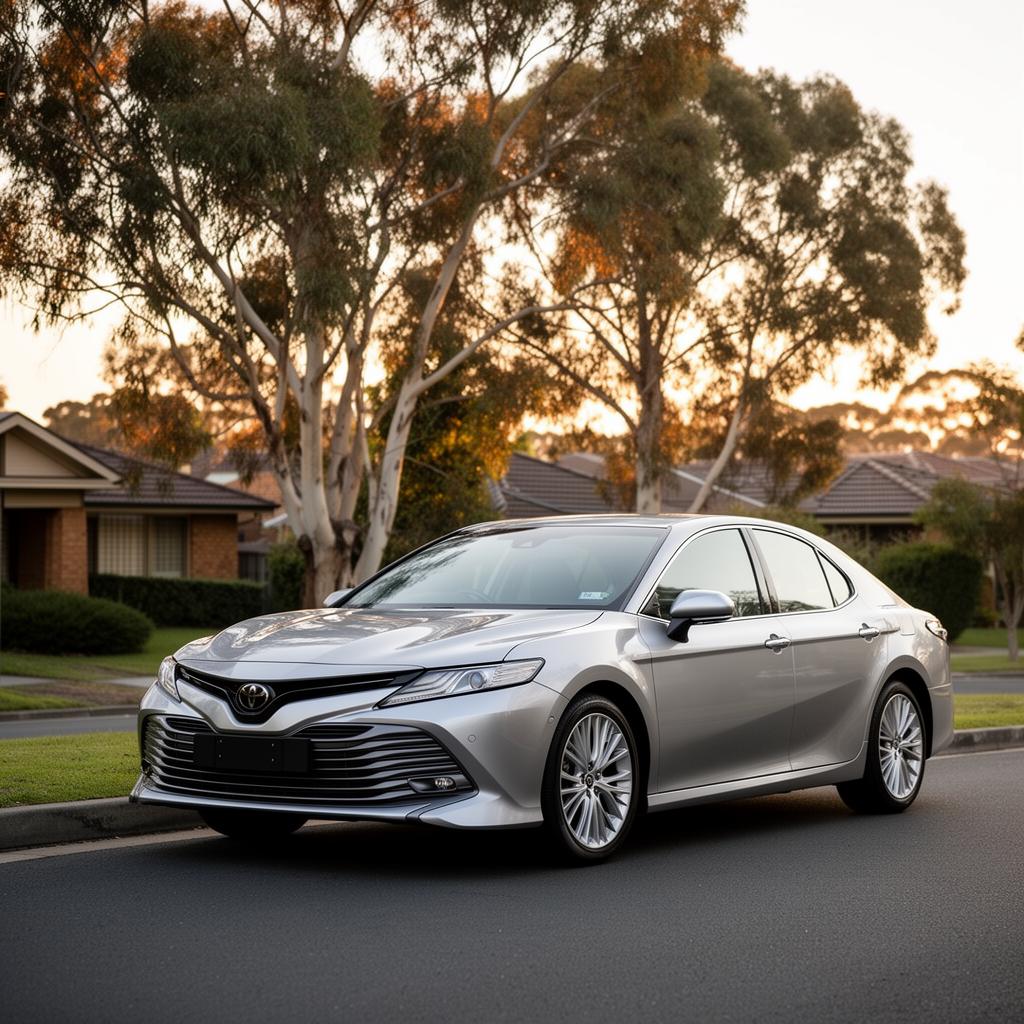
Most Camrys are genuinely good cars. But the ones that aren't are expensive disappointments. Here's exactly what we check on every Camry that comes through, with repair costs current to mid-2026 Sydney.
1. Rideshare and fleet wear — the Camry's biggest hidden risk
The XV50 (2012–2017) and XV70 (2018–present) became the default vehicle for rideshare operators, because they're comfortable, reliable and have a low cost-per-kilometre. Thousands of them accumulated 300,000–500,000km in Uber and taxi service, then cycled through wholesale auctions onto the private and used-dealer market.
A well-laundered ex-rideshare Camry can be nearly impossible to spot without knowing where to look. We find them regularly.
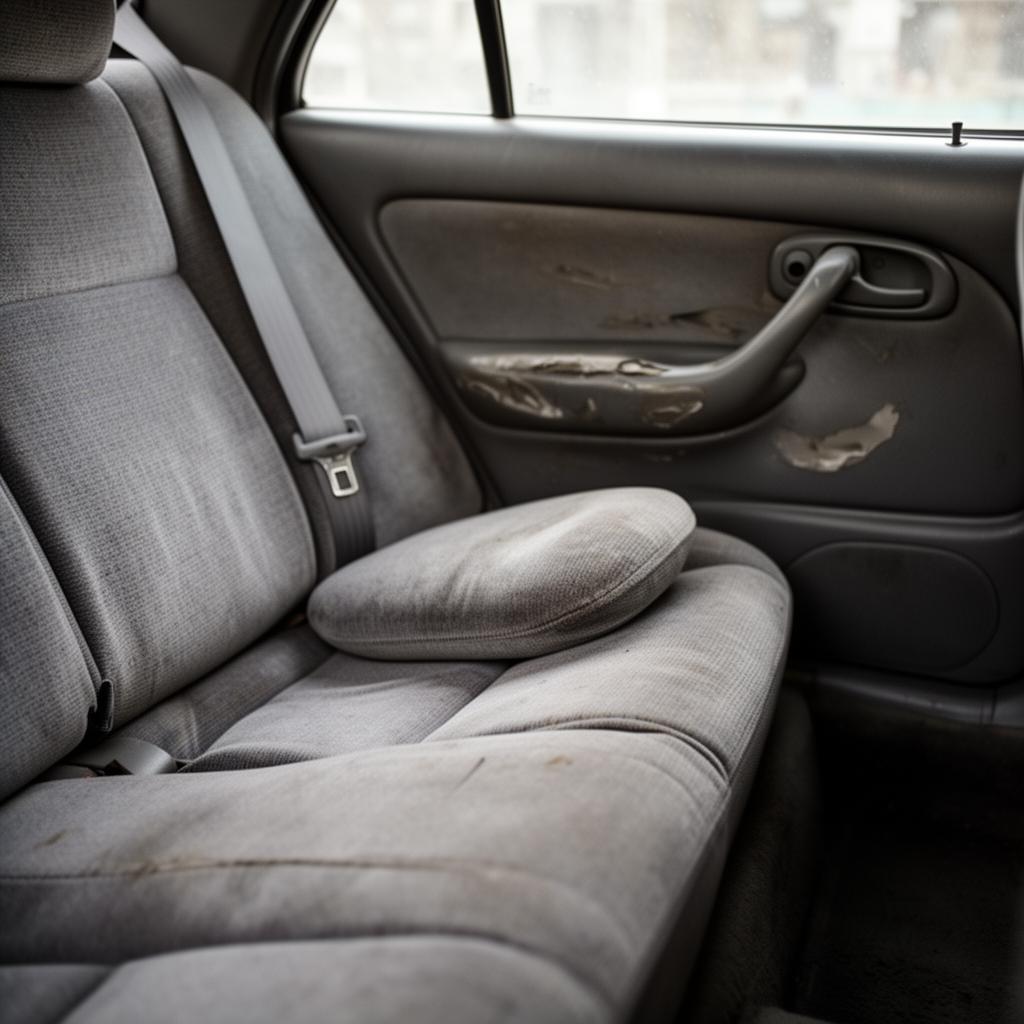
How to identify a former rideshare or taxi Camry
- Rear seat base wear — driver's-side rear visibly more compressed than passenger side.
- Rear door card scuffs around the inner door pull from passengers grabbing it.
- All four ceiling grab handles showing wear — not just the front passenger's.
- Filled holes in the boot lid from a secondary plate or company ID mount.
- Suspiciously new rubber floor mats on an older car — lift them and check carpet underneath.
- Odometer that doesn't match interior age, logbook stamps, or PPSR fleet records.
2. Hybrid battery degradation (ASV50, AXVH70)
The Camry Hybrid is the highest-volume variant in Sydney's used market, and hybrid battery condition is the single most important variable in its value.
Toyota's nickel-metal hydride (NiMH) battery pack in the XV50 hybrid (ASV50) is designed to last the life of the vehicle when well maintained — and many do. But rideshare-used packs cycle far more frequently than normal, and age-related capacity loss accelerates past 120,000–150,000km on hard-worked examples.
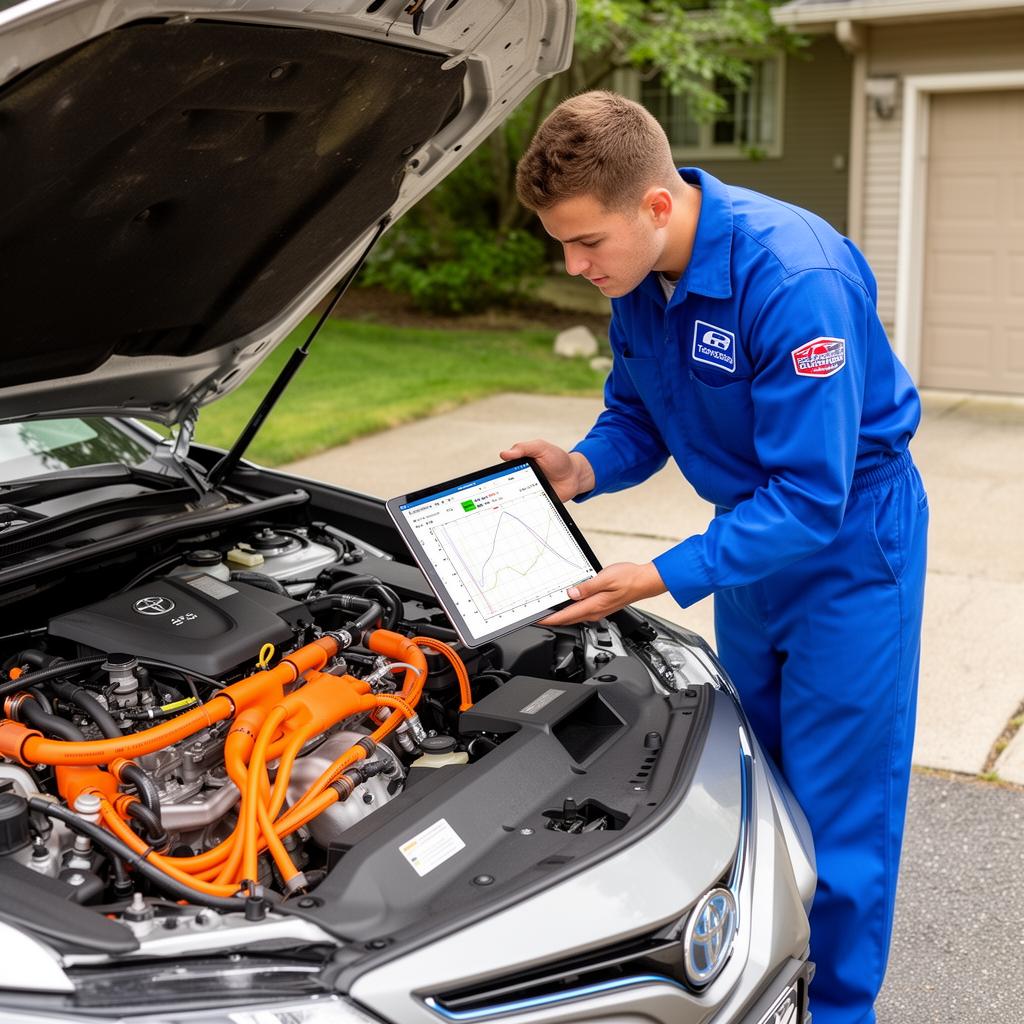
- Reduced fuel economy — a healthy XV50 Camry Hybrid should return 5.0–5.8L/100km in mixed Sydney driving. Above 7L/100km, the battery isn't contributing properly.
- Battery SOC fluctuating rapidly — healthy packs hold charge across a broad band; weak packs yo-yo on the hybrid display during a test drive.
- Petrol engine cutting in at low speed — should be able to run electric-only under 40km/h with a warm battery.
- HV battery warning lamp — and pending codes the seller may have cleared (we scan for both).
- Long warm-up before hybrid mode engages — more than 3–4 minutes of petrol-only from cold suggests a battery management issue.
3. Oil consumption — 2AR-FE petrol engines
The 2.5L 2AR-FE four-cylinder petrol engine in the XV50 series has a documented oil consumption issue, particularly on early production 2012–2014 models.
Toyota issued a technical service bulletin (TSB) and extended the warranty coverage on affected engines. Consumption rates above 1L per 1,000km are considered excessive and may indicate piston ring wear or valve stem seal deterioration.
How to check at the point of sale
- Pull the dipstick — burnt oil has a sharp acrid edge versus fresh; thick black oil on a low-km car suggests infrequent changes.
- Check the oil cap for creamy mayonnaise-coloured residue — that's coolant intrusion, walk away.
- Ask when the oil was last changed and how much was needed — receipts will show the top-up volume.
- On inspection we run a cold-start blue smoke check — startup smoke = valve stem seals, under-load smoke = ring wear.
Repair cost for a ring job: $3,500–$5,500. Valve stem seals: $900–$1,500. Neither is fatal if priced in — but neither should be a surprise.
4. Automatic behaviour — early engagement judder
Transmission choice on Camry depends on variant. The XV50 petrol uses a 6-speed automatic on most variants. The XV70 petrol moved to a conventional 8-speed automatic. Both Camry Hybrid generations (XV50 ASV50 and XV70 AXVH70) use Toyota's eCVT — a planetary power-split hybrid transaxle, not a belt-and-pulley CVT. That eCVT is generally one of the most reliable transmissions on the market when fluid services are kept up.
On the 6-speed automatic in some early XV50 Camrys (2012–2014) you can get a low-speed engagement shudder caused by torque converter lockup clutch wear.
What it feels like: a light vibration or shudder at 40–70km/h during light throttle cruise, particularly when the transmission is trying to stay in lockup mode for fuel economy. It's subtle and easy to miss on a quick test drive.
How to check: drive at 60km/h on light throttle for at least 90 seconds. If you feel a rhythmic vibration through the floor — not a rough road — it's likely torque converter shudder. A transmission fluid drain and refill with Toyota WS fluid sometimes resolves mild cases. Torque converter replacement is $1,500–$2,200 if the clutch is worn through.
On the XV70 8-speed petrol, look for smooth, decisive upshifts. Hesitation on kickdown from 80km/h or hunting between 8th and 7th on the freeway can indicate a software calibration issue or, on higher-km examples, fluid degradation.
On the eCVT hybrid, you should feel seamless acceleration with no distinct "shifts." Whining, grinding or driveline shudder under load on a hybrid is unusual — and a reason to walk away pending a deeper inspection.
5. Suspension — strut top mounts and rear trailing arm bushes
The Camry's ride quality is a genuine selling point. When it starts to deteriorate, the cause is almost always the same two things.
Front strut top mounts: the upper strut mount bearing wears and causes a clunking or creaking sound when turning at low speed — most audible in car parks or reversing. Common at 80,000–120,000km. Parts and labour: $350–$550 per side.
Rear trailing arm bushes: the rear suspension uses trailing arms with large rubber bushes that deteriorate with age and city driving cycles. Worn bushes allow the rear wheels to toe out under load, causing a slightly disconnected, vague feel when changing lanes at speed. It's subtle enough that many buyers miss it on a test drive. Bush replacement: $600–$900 fitted at an independent.
We pry-test both during every Camry inspection. On an ex-rideshare vehicle, expect to find both worn.
6. Brake wear patterns unique to city-driven Camrys
Sydney stop-start driving is hard on brake components. On a Camry Hybrid, the picture is more nuanced.
The hybrid regenerative braking system reduces front-brake use significantly in low-speed city driving. This means front rotors on hybrid Camrys can develop surface rust and light pitting simply from underuse — the opposite problem from a conventional car. Light corrosion on a hybrid Camry is not necessarily a sign of neglect; it can mean the regenerative system is working as intended.
Rear brakes on hybrids, however, wear faster relative to fronts because the regen system acts primarily on the front axle. Rear brake pad replacement is the more common find on hybrid Camrys.
What we check: pad thickness front and rear, rotor face and lip wear (the step left by the pad sweep area), caliper slide pin movement, and brake fluid colour and boiling point. Discoloured fluid that's running above 3.5% moisture content should be replaced before the wet season — Sydney humidity accelerates fluid contamination.
7. Water pump seep — timing chain–driven units
The 2AR-FE engine uses a timing chain–driven water pump — as distinct from an external belt-driven unit. This design is generally more reliable, but when it starts to seep, coolant can drip onto the timing chain and chain guides.
A small seep is a $900–$1,200 repair at an independent. If it's been seeping for a while and the guides have absorbed coolant, the repair bill climbs to $2,500+ as guide replacement becomes necessary.
How to check: look for faint white mineral deposits or dried residue on the lower engine block near the timing cover. Any staining here warrants a pressure test before purchase.
On the XV70's 2.5L Dynamic Force engine (A25A-FXS in hybrid variants), the water pump is electrically driven — a completely different design with its own failure modes, primarily electrical connector corrosion. Check for coolant warning history in the scan data.
8. Paint and panel — rear quarter rust (older XV50)
The XV50 Camry built between 2012 and 2014 had a documented issue with paint adhesion on the rear quarter panels on some early production runs. Bubbling at the bottom of the C-pillar and rear arch lip is the most common presentation.
In Sydney's coastal humidity, this can progress quickly once it starts. A paint thickness reading (included in our Comprehensive and Elite inspections) flags any panel that's been flatted and resprayed to address the rust.
Also check: boot lid lower edge for moisture ingress if the rear seal is deteriorating, and the leading edge of the front doors at the bottom — a rust trap on any car that's been used heavily in wet conditions.
Which model year to buy
| Era | Verdict | Watch-outs |
|---|---|---|
| 2012–2013 XV50 petrol | Avoid | Worst oil consumption, early auto calibration issues, early paint runs |
| 2014–2016 XV50 | Acceptable with close inspection | Confirm oil consumption TSB was actioned; check receipts |
| 2017–2019 (late XV50 / early XV70) | Sweet spot | XV70 brings Toyota Safety Sense as standard; hybrids usually have battery life remaining |
| 2020–2022 XV70 | Strong buy | Refined 8-speed, updated hybrid, modern 5-star ANCAP — $26K–$34K |
Camry Hybrid vs petrol: which used buy makes more sense?
For most Sydney buyers, the hybrid makes more financial sense — but only if the battery is healthy.
The fuel savings on a hybrid ($1,200–$1,800/year at Sydney driving distances, compared with the petrol equivalent) generally offset the $2,000–$3,000 used-market premium over the petrol over a 2–3 year ownership period. Rideshare and courier operators understood this and used them accordingly, which is exactly why battery condition matters.
The petrol-only Camry (Altise / Ascent variants) is a simpler mechanical proposition — no HV battery risk, no hybrid system to interrogate — and makes sense if the purchase price difference is modest and you want to avoid any complexity. It is, however, noticeably less fuel efficient in Sydney traffic.
Common questions
How many kilometres is too many on a used Camry?
A well-maintained petrol Camry with a clean service history can be a sound buy at 180,000–200,000km. The 2AR-FE engine is genuinely long-lived if the oil consumption issue was addressed. On a hybrid, km alone isn't the right metric — battery health and cycle count matter more. We've inspected XV50 hybrids at 240,000km with batteries in excellent condition, and others at 130,000km with significant degradation from rideshare use.
Is it safe to buy a Camry without a logbook?
No. The Camry's biggest risk is undisclosed commercial use, and the logbook — combined with ECU runtime data — is the primary way to verify actual usage history. A seller without a logbook on a vehicle where logbook servicing is the norm is a yellow flag. Without one, assume fleet or rideshare history and price accordingly.
What should I pay for a used Camry in Sydney right now?
Mid-2026 Sydney pricing (private sale): XV50 Atara S petrol, 100,000–130,000km, $14,000–$18,000. XV50 Atara SL Hybrid, 120,000–150,000km, $16,500–$21,000. XV70 Ascent Sport hybrid, 60,000–80,000km, $27,000–$33,000. Prices soften fast on any car above 200,000km or without full service history.
Lock in your inspection
Book a mobile pre-purchase inspection at the seller's address. Same-day slots across Sydney from $199, with a written repair cover on Elite (30 days / up to $3,000).
Mobile inspections near you