Ford Ranger buyer's guide — PX, PX2, PX3 and Next-Gen problems (Sydney 2026)
Used Ford Ranger in Sydney? PX-series 3.2L oil pump failure, 2.0L bi-turbo gearbox issues, Next-Gen 3.0L V6 known concerns — every common Ranger fault we see weekly, with what to check and current repair costs.
The Ford Ranger has eaten into the HiLux's lead in Australia and is now the second-most-inspected ute on our books. The PX-series (2011–2022) and the all-new Next-Gen (2022+) are mechanically very different vehicles and need different inspection approaches.
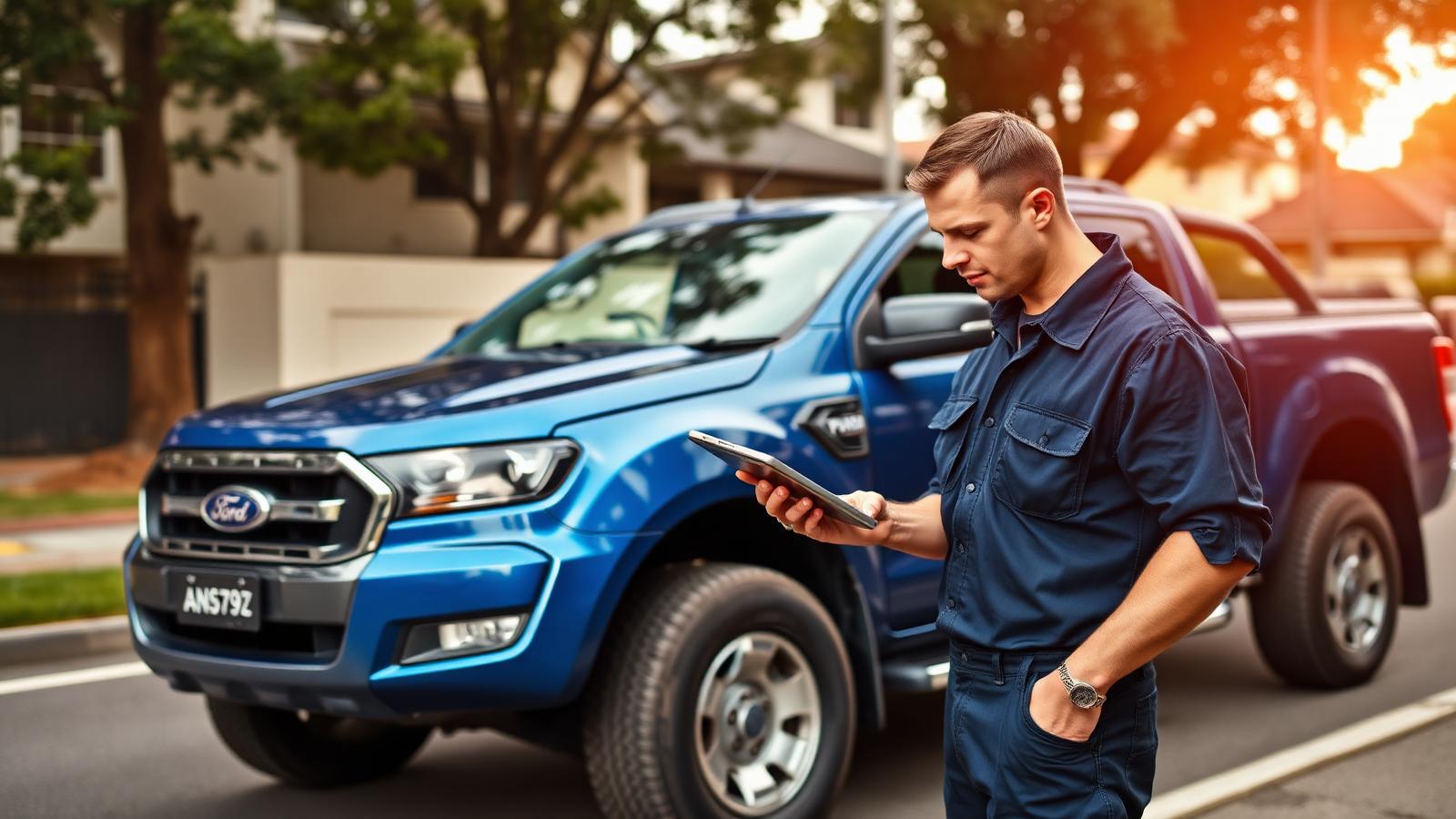
Below is what we look for, by generation, with mid-2026 Sydney repair pricing.
1. 3.2L 5-cylinder Duratorq (PX/PX2/PX3) — oil pump and timing chain
The 3.2L 5-cylinder diesel was the volume engine for PX-series Rangers. It is generally a strong unit, but two failure modes are well-documented and expensive when ignored.
- Oil pump pickup screen clogging — the screen blocks with carbon over time and starves the engine of oil pressure. End result on the worst cases: bearing failure or top-end damage.
- Timing chain stretch and tensioner wear — typically presenting as a rattle on cold startup that takes 1–2 seconds to settle.
- Turbo actuator wear — boost surge or limp mode under load past 150,000km.
We do an oil pressure interrogation via OBD on every 3.2L Ranger and listen carefully through a cold start. A healthy 3.2 should hold 40+ psi hot at idle and settle within a second of cold cranking.
2. 2.0L bi-turbo (Raptor and 2018+ XLT/Wildtrak) — variable boost and gearbox
The 2.0L bi-turbo replaced the 3.2 in many trims from 2018. It is more fuel-efficient and pairs with a 10-speed automatic. It also has a more complex failure pattern.
- High-pressure pump (HPP) issues — early bi-turbos had failures of the high pressure fuel pump. Symptom: limp mode, fault code P0089 or P008A.
- Wet timing belt at the camshaft drive — runs in oil, replacement interval ~240,000km. On a high-km example, factor in the cost of belt service.
- 10-speed automatic harsh shift — torque converter lockup clutch wear or solenoid issues; software updates resolved many cases but not all.
3. Next-Gen Ranger 3.0L V6 — cooling and software
The Next-Gen Ranger (P703 platform, 2022+) introduced a 3.0L V6 turbo diesel — a smoother, more powerful engine than anything in the PX series. It is too new to have a deep fault history, but early production examples have exhibited some teething patterns.
- Cooling system air pockets — symptoms include intermittent overheating warnings during prolonged towing.
- Software glitches in the SYNC4 infotainment — most resolved via OTA updates; confirm latest version is installed.
- Front axle vibration above 110km/h — addressed under a service campaign on early VINs; check whether the rectification was done.
4. PowerShift dual-clutch (early 2.2L) — to be avoided
Some early PX Rangers (2012–2014) with the 2.2L diesel were fitted with the PowerShift dual-clutch automatic — the same transmission that caused widespread issues in Fiesta and Focus passenger cars. Shudder, hesitation and clutch pack failure are common.
5. Chassis, towbar and rear suspension
Like the HiLux, the Ranger's chassis tells the truth about how the ute lived. Specific Ranger-only patterns:
Ranger chassis checklist
- Rear shock absorber leaks — common past 80,000km on rough-use examples.
- Tow bar wear and trailer plug condition — sagging rear under load = tired leaf springs.
- Chassis rail rust at the rear cross-member junction — particularly on coastal Sydney Rangers.
- Driveshaft centre bearing wear — clunk on take-off from standstill.
- Front lower ball joints — pry-test for play, common N80-style wear pattern.
6. Electrical — battery management and start-stop
Later PX3 and Next-Gen Rangers use a smart battery management system. A failing AGM battery — even one that still cranks the engine — can throw a cascade of fault codes for ABS, traction control and the touchscreen. Symptom: multiple warning lights on startup that clear after a few minutes.
Always test battery state-of-health on a Ranger inspection. A weak battery on a 4-year-old Ranger is a $400 fix; a misdiagnosed weak battery becomes a $1,500 sensor replacement that didn't need to happen.
Which model year to buy
| Era | Engine / Trans | Verdict |
|---|---|---|
| 2011–2014 PX | 3.2L / 6-speed auto | Acceptable on price; avoid 2.2L PowerShift |
| 2015–2018 PX2 | 3.2L / 6-speed auto | Sweet spot for a simple, durable Ranger |
| 2018–2022 PX3 | 2.0 bi-turbo / 10-speed | Cautious buy; confirm software updates and HPP behaviour |
| 2022+ Next-Gen | 3.0L V6 / 10-speed | Strong buy on later VINs; verify service campaigns done |
| 2023+ Ranger Raptor | 3.0L petrol V6 twin-turbo | Specialty buy; confirm no track use, premium fuel only |
Common questions
Ranger or HiLux — which holds up better used?
PX2 3.2L and N70 1KD have roughly equivalent reliability when both are well-maintained. The Next-Gen Ranger 3.0L V6 is currently a more sophisticated platform than the N80 HiLux but is too new for definitive long-term data. We inspect both extensively; neither is fault-free.
Is the 10-speed automatic a problem?
Not inherently — but it is more failure-sensitive than the 6-speed. Confirm clean shift quality on a long test drive (10–80km/h gentle acceleration and a freeway run), scan for stored solenoid or torque converter codes, and check transmission fluid colour through the dipstick (Ford has reinstated dipsticks on Next-Gen).
Are ex-fleet Rangers safe to buy?
Workmate trim Rangers from fleet companies (Custom Fleet, ORIX, Toyota Fleet Management) have generally been serviced to schedule. The concern is operator abuse — hard-use tradie examples that have towed beyond the rated 3,500kg or been driven loaded on bumpy job sites. Inspect the chassis, rear leaf springs and clutch (manual) carefully.
Lock in your inspection
Book a mobile pre-purchase inspection at the seller's address. Same-day slots across Sydney from $199, with a written repair cover on Elite (30 days / up to $3,000).
Keep reading
Related guides
The Sydney Tradie's Guide to Buying a Used 4WD or Ute: Chassis, Towing, DPF and the $8,000 Mistake to Avoid
Read Make & ModelIsuzu D-Max Buyer's Guide Sydney: The Ute the Tradies Love — and the 3 Things Every Buyer Misses
Read Make & ModelToyota LandCruiser Prado Buyer's Guide Sydney: 150-Series and 250-Series Watch-Outs Before You Sign
ReadMobile inspections near you