
Toyota HiLux buyer's guide — N70 and N80 common problems (Sydney 2026)
Buying a used Toyota HiLux in Sydney? N70 and N80 dual cabs have specific faults — DPF and injector issues on the 1KD and 1GD, automatic gearbox shudder, dual-mass flywheel wear, and ex-fleet abuse. Here's what to check.
The Toyota HiLux has been Australia's top-selling vehicle for most of the last decade. That popularity, plus its near-mythic reliability reputation, means used HiLuxes are priced at a premium and often have a harder life than the seller will admit.
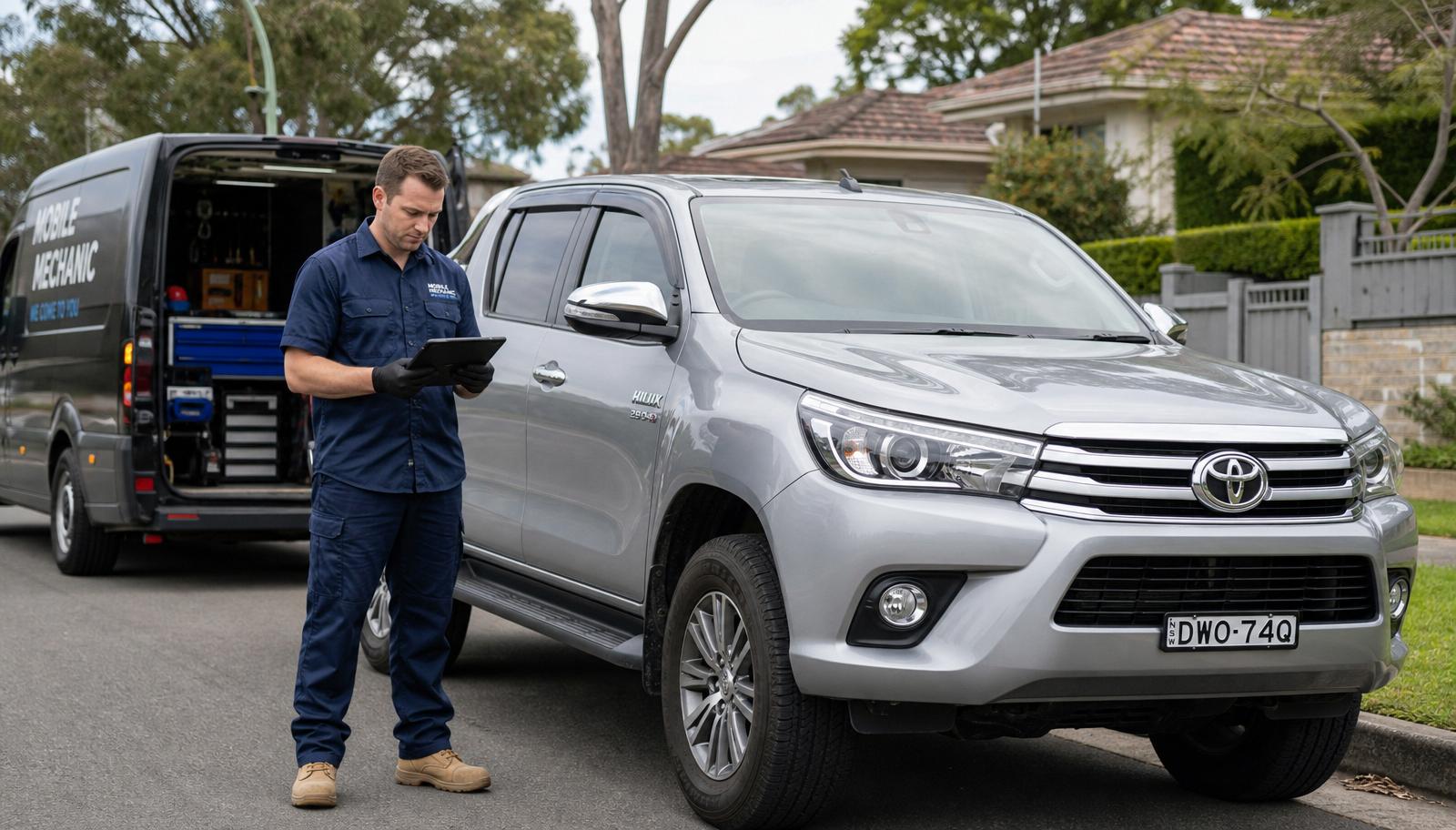
Across the N70 (2005–2015) and N80 (2015–current) generations, the same patterns appear over and over. Here's the catalogue, with repair costs current to mid-2026 Sydney.
1. 1KD-FTV 3.0L diesel — injector and head problems (N70)
The 1KD-FTV is the most common N70 engine in the used market and has two well-known patterns we see weekly.
- Injector tip failure — leaking injectors wash fuel into the cylinder and over time crack the piston crown or burn a valve. Symptoms: white smoke at idle, rough cold start, knock under load.
- Cylinder head warping / cracking around the injector seats — typically follows long-term untreated injector leaks. Visible by carbon staining around injector base and compression test variation cylinder-to-cylinder.
- Excessive crankcase blow-by — pull the oil filler cap with the engine running and check for puffing. Strong puffing indicates ring wear or stuck oil control rings (carbon).
When buying a 1KD N70, the cleanest examples have a documented injector service or replacement in the last 80,000km and a compression test inside 10% across all four cylinders. We do both as part of our HiLux inspection.
2. 1GD-FTV 2.8L diesel — DPF, EGR and intake (N80)
The 1GD-FTV introduced with the N80 in 2015 is more efficient than the 1KD but has its own well-documented faults — primarily centred on the emissions system.
- DPF blocking on short-trip city use — the regen cycle is aggressive and dumps fuel into the cylinder to raise exhaust temperature. Cars that never complete a regen end up with diluted oil and a clogged filter.
- EGR cooler and intake carbon — sticky soot accumulates and can crack the EGR cooler, allowing coolant into the intake. Misted coolant on the airbox is a clue.
- Oil dilution as a consequence of failed regens — oil level rising above max on the dipstick with a diesel smell is the symptom.
Toyota issued multiple TSBs and ECU recalibrations through 2019–2021 to address regen reliability. Confirm the latest software calibration has been applied (Toyota dealer can verify) and that the DPF is not in chronic regen attempts when the car is scanned.
3. Six-speed automatic — torque converter shudder
The N80's AC60F 6-speed auto develops a low-speed shudder under light throttle in 4th or 5th, typically appearing past 100,000km. It's a torque converter lockup clutch issue and is widely documented in Toyota technical forums and owner reports.
Symptom: rhythmic shudder at 50–80km/h on light cruise, particularly noticeable up gentle inclines. Often misread as engine misfire or driveshaft imbalance.
Caught early, a transmission flush with Toyota WS fluid can buy time. Torque converter replacement is $2,200–$3,200 fitted. We replicate the failure conditions during every HiLux test drive.
4. Dual mass flywheel and clutch (manual)
N70 and N80 manual HiLuxes use a dual mass flywheel that absorbs diesel engine vibration. They wear out — particularly on tradie utes that have spent their life towing or have been driven aggressively from cold.
Symptoms: a metallic rattle at idle that disappears when the clutch is pressed, judder on take-up from standstill, or a heavy clunk on engine shutdown. Replacement is a clutch-out job — $2,800–$3,800 fitted including a new clutch kit.
5. Suspension and chassis — fleet and tow abuse
Most HiLuxes that come through our inspections have towed, hauled, or been used commercially at some point. The fingerprints are clear if you know where to look.
Chassis and suspension check
- Rear leaf spring sag — measure ride height left to right. Difference >15mm = at least one spring fatigued.
- Tow bar wear — shiny ball, paint chip on receiver, sagging bump stops point to heavy towing.
- Rear cross-member rust — particularly on N70s used coastal. Surface rust acceptable; flaky or pitted means structural concern.
- Steering rack play and tie rod end wear — common on cars used on rough job sites or unmade roads.
- Front control arm bush perishing — N80 LHS lower control arm bush is a known wear item past 80,000km.
6. Power steering recall (N70)
Toyota Australia issued a power steering recall affecting many N70 HiLuxes — the steering shaft intermediate joint can wear and, in rare cases, fail. Confirm the recall work was completed via a Toyota dealer VIN check before purchase.
7. Ex-mine, ex-fleet and ex-rental — how to spot them
Commercial-history giveaways
- Filled holes in the tray or bullbar from removed company signage.
- Tray liner replaced or repainted to hide cargo damage.
- Driver's-side seat squab heavily worn against a near-new passenger seat.
- Door cards scuffed at the inner pull — fleet drivers grab the handle hundreds of times a week.
- Service stickers from regional WA, QLD or NT — possible mine fleet origin.
- PPSR showing finance from a fleet leasing company (Toyota Fleet Management, ORIX, Custom Fleet).
Which model year to buy
| Era | Verdict | Watch-outs |
|---|---|---|
| 2005–2010 N70 (KUN26) | Acceptable on price | Pre-DPF, simpler 1KD; check for injector and head issues |
| 2011–2015 N70 facelift | Solid | DPF added; suspension and steering recall items must be verified |
| 2015–2018 N80 (1GD) | Cautious buy | DPF teething issues; confirm ECU calibration up to date |
| 2019–2022 N80 facelift | Sweet spot | Refined 6-speed auto, better DPF behaviour, mature 1GD |
| 2023+ N80 48V hybrid | Strong buy | Latest mild hybrid system; too new for resale data but mechanically refined |
Common questions
What kilometres are acceptable on a used HiLux?
With full service history, a 1GD HiLux is sound to 200,000–250,000km. A 1KD with documented injector and head work is sound similarly. Without documentation, any HiLux above 180,000km should be price-adjusted to reflect the likelihood of a major repair within the next 30,000km.
Are HiLuxes as reliable as everyone says?
The base mechanical platform is genuinely durable. What kills HiLux reliability is hard fleet/mine use, neglected DPF regens on the 1GD, and undiagnosed injector leaks on the 1KD. A privately owned, suburban-use HiLux with full Toyota service history is one of the most reliable vehicles on the road. An ex-fleet example with no records is a coin flip.
Should I avoid the auto and buy a manual HiLux?
The torque converter shudder issue on the auto is real but generally addressable. The manual avoids that problem but introduces dual mass flywheel and clutch wear. We see roughly equal failure rates between the two — buy whichever suits you and have it inspected.
Lock in your inspection
Book a mobile pre-purchase inspection at the seller's address. Same-day slots across Sydney from $199, with a written repair cover on Elite (30 days / up to $3,000).
Mobile inspections near you