
Buying a used car privately in Sydney? Why you need an independent inspection
Private sales are where the best value in the Sydney used-car market lives — and where every consumer protection disappears. Here's exactly what an independent car inspection changes about a private purchase, what it costs, and how to run the whole process without losing the car.
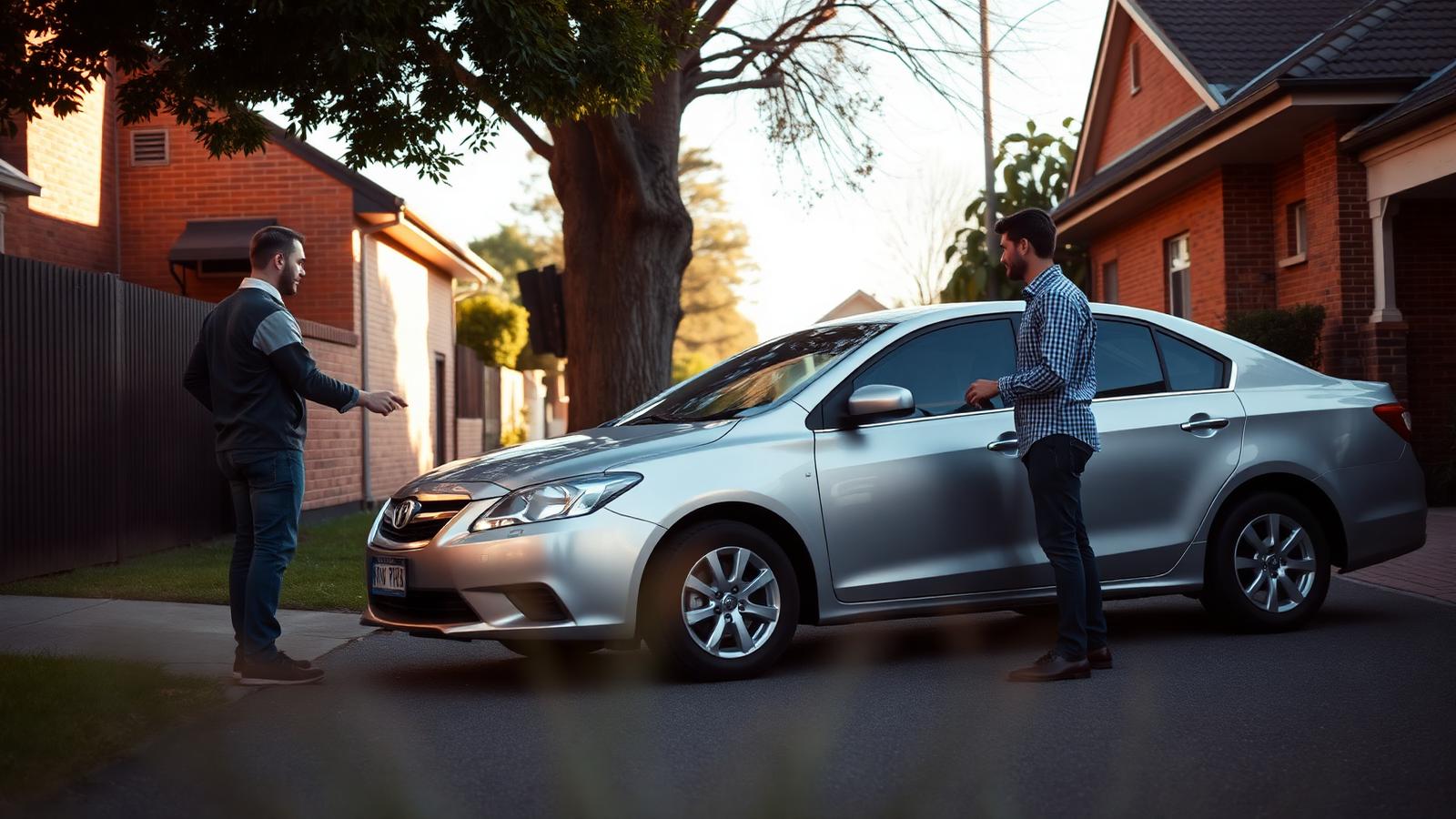
Roughly half the used cars that change hands in Sydney never touch a dealer forecourt. They're sold on Facebook Marketplace, Carsales private listings, Gumtree and in workplace car parks — usually $2,000 to $5,000 below the equivalent dealer price, because there's no yard, no floor plan finance, and no salesperson to pay. That discount is real, and it's the single best reason to buy privately.
The catch is what disappears with it. When you buy from a licensed NSW motor dealer, you get a statutory used-car warranty on eligible vehicles, a cooling-off period on finance-linked contracts, a written contract, and a regulator (NSW Fair Trading) who can act if things go badly wrong. When you buy privately, you get none of that. The transaction is 'sold as is, where is'. Once the money moves, every fault in that car is legally, financially and practically yours.
What you actually lose buying privately in NSW
| Protection | Licensed dealer | Private seller |
|---|---|---|
| Statutory used-car warranty | Yes, if under 10 yrs & 160,000 km | None |
| Australian Consumer Law guarantees | Yes — acceptable quality applies | No — ACL doesn't cover private sales |
| Written contract with terms | Required | A handwritten receipt, if you're lucky |
| Guaranteed clear title (no finance owing) | Dealer's legal obligation | Your job — check PPSR yourself |
| Fair Trading dispute pathway | Yes | Civil claim only, at your cost |
| Cooling-off period | Sometimes (finance-linked) | Never |
The PPSR line matters more than people expect. If a private seller still owes money on the car and you buy it without checking the Personal Property Securities Register, the financier can repossess the vehicle from your driveway — and you have no claim against anyone except a seller who has already spent your money. It happens in Sydney every week.
Why 'independent' is the word that matters
An independent inspection means the person assessing the car has no relationship with the seller, no interest in the sale completing, and nothing to gain from a particular outcome. That sounds obvious until you notice how often it isn't the case:
- The seller's own mechanic — 'my guy just serviced it, he says it's perfect'. He also wants to keep the seller as a customer.
- A workshop the seller recommends — same conflict, one step removed.
- A recent pink-slip style safety check — that's a registration test, not a condition report, and the tester never drove the car cold.
- A dealer-arranged inspection on a dealer-sourced car — the person paying the invoice is the person selling the car.
You want the inspector to be working for you, and only you. That's what makes the report usable as negotiating evidence — and what makes a 'walk away' recommendation trustworthy when it comes.
What an independent inspection covers on a private-sale car
Private-sale cars need a slightly different emphasis to dealer stock. Dealer cars have usually been detailed, checked and prepared — the risk is what got covered up. Private cars are usually presented honestly but maintained inconsistently — the risk is what was never done. A good inspection targets both, across 150+ checkpoints:
Priority areas on a private purchase
- Cold start — most private sellers warm the car before you arrive; we arrange a genuinely cold start where possible, because that's when timing chain rattle, injector knock and blue-smoke oil burn actually show.
- Full ECU scan including stored and pending codes — a code cleared last week reappears as a pending fault.
- Service history verification against the logbook, stamps, dealer records and the odometer — not just 'the folder looks full'.
- PPSR: finance owing, written-off status, stolen check, and odometer records against registration history.
- Paint depth on every panel to reveal accident repair the seller may not even know about.
- Brake pad and rotor measurement in millimetres, tyre age by DOT code, and remaining tread — the three costs that hit within six months.
- Undercarriage: oil leaks, coolant weep, rust, and impact damage to subframes and sills.
- Road test under load — hills, highway merge, hard brake, full-lock turns — plus transmission behaviour at temperature.
The written report then converts each finding into three things you can use: severity, likely repair cost, and whether it should change the price or end the deal. That's the difference between 'there's some oil around the rear main seal' and 'this is a $1,900 gearbox-out job — either the price drops by that amount or you walk'.
The negotiation maths private buyers keep missing
Private sellers are not professional negotiators. They've usually set a price based on other listings, not on their car's actual condition. That makes evidence unusually effective — far more so than at a dealership, where the salesperson has heard every argument before.
| Finding on report | Typical Sydney repair cost | Realistic price move |
|---|---|---|
| Four tyres at 3 mm or older than 5 yrs | $700 – $1,400 | Full amount, usually agreed |
| Front pads and rotors at limit | $650 – $1,100 | Full amount |
| Timing belt overdue by age or km | $900 – $1,800 | Full amount, or seller does it before settlement |
| Rear main seal / sump oil leak | $1,200 – $2,400 | Negotiate hard or walk |
| Previous accident repair found on paint gauge | n/a — resale impact | 3 – 8% of value |
| Transmission shudder under load | $3,000 – $7,000+ | Walk away |
Costs are indicative Sydney independent-workshop ranges for common passenger cars and vary by make, model and parts availability — European and EV platforms typically sit at the upper end or above. The point isn't the exact number; it's that a photographed, itemised finding turns a vague haggle into a specific, defensible request.
"The buyers who save the most aren't the toughest talkers. They're the ones holding a report with photos, measurements and a repair figure next to every fault."
How to run a private-sale inspection without losing the car
The most common objection we hear is 'I didn't want to lose the car by slowing things down'. Handled properly, an inspection adds less than a day — and a seller who won't allow one has told you something important for free.
- 1.Do the phone screen first: ask for VIN, rego, exact kilometres, service history, and whether the seller is the registered owner. A refusal here saves you a trip.
- 2.Run the PPSR check yourself before you drive anywhere — it costs a few dollars and rules out finance and written-off vehicles instantly.
- 3.See the car in person and drive it. If you still want it, say so plainly: 'I'm serious about buying at the right price, subject to an independent inspection tomorrow.'
- 4.Book a mobile inspector to the seller's address so the seller doesn't have to move the car. Removing their inconvenience removes most of their resistance.
- 5.Be reachable during the inspection window. Your inspector calls you with the verdict before writing the report, so you can act while the seller is still standing there.
- 6.Negotiate off the written report, in writing — quote the specific finding and the repair figure, not a general 'it needs work'.
- 7.If you proceed: pay by bank transfer with a receipt naming both parties, VIN, rego, price and date, and transfer registration with Service NSW within 14 days.
What it costs versus what it protects
On a $25,000 private purchase, a comprehensive independent inspection is roughly one per cent of the transaction. The faults that inspection is looking for — timing chain wear, transmission shudder, hidden accident repair, an overdue major service, finance owing on the title — start at four figures and run well past ten thousand dollars on European and EV platforms.
Put another way: if an inspection finds nothing, you've bought certainty and a documented condition record for the car you now own. If it finds something, it almost always pays for itself several times over in the same afternoon — either as a price reduction or as a purchase you didn't make.
We inspect across Greater Sydney, the Central Coast, Wollongong and Newcastle, at the seller's address, seven days a week. If you've found a private listing and you're not sure what you're looking at, that's exactly the job.
Common questions
Is a pre-purchase inspection worth it on a private sale?
On a private sale it's the only protection you get. There's no statutory warranty, no Australian Consumer Law guarantee of acceptable quality and no cooling-off period on a private used-car purchase in NSW — so the inspection is the last point at which a problem is still the seller's, not yours.
Can you inspect a car at a private seller's home?
Yes — that's the normal arrangement. Our inspector comes to the seller's address anywhere across Greater Sydney and surrounds, completes the inspection on site, and calls you with the verdict before the written report is issued.
What if the private seller won't allow an inspection?
Treat it as a finding in itself. Offer to work around their schedule and to have the inspector come to them. If it's still a no, we'd recommend moving on — there are always more cars, and a refusal on an otherwise good listing is a pattern we see repeat.
Do I still need a PPSR check if I get an inspection?
You need both, and our inspections include the PPSR check. The inspection tells you the car's mechanical condition; the PPSR tells you whether the seller can legally sell it free of finance and whether it's been written off or reported stolen.
How quickly can you inspect a private-sale car in Sydney?
Usually same day if you book before 11am, otherwise next day. Private listings move fast, so speed matters — you can hold your position with the seller by booking the inspection immediately and telling them the time.
Lock in your inspection
Book a mobile pre-purchase inspection at the seller's address. Same-day slots across Sydney from $199, with a written repair cover on Elite (30 days / up to $3,000).
Mobile inspections near you