
Mazda BT-50 Problems: Used Buyer's Guide for UP/UR and TF Utes
Short answer: A used Mazda BT-50 is a solid buy if you check the right things. On the 2011–2020 UP/UR (Ranger-based 3.2/2.2), check oil-pump servicing, injectors and the gearbox. On the 2020+ TF (Isuzu D-Max 3.0), check the DPF and steering, and confirm the recalls by VIN. Then get the chassis inspected before you pay.
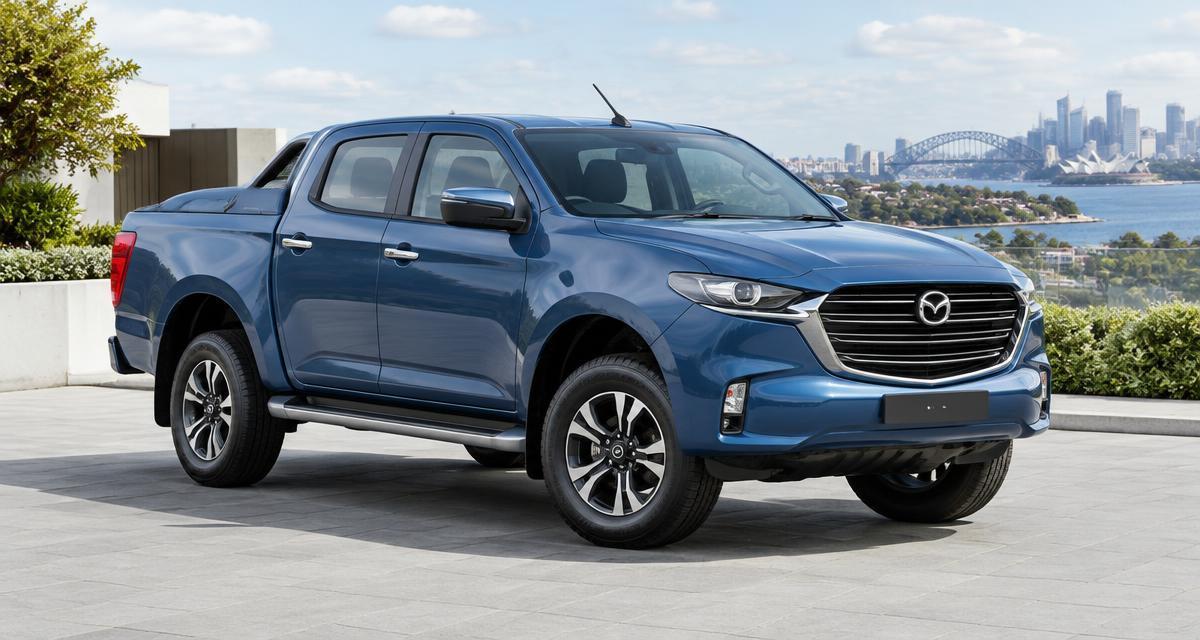
Last updated: 26 October 2026
| Key facts | UP/UR BT-50 (2011–2020) | TF BT-50 (2020–present) |
|---|---|---|
| Underpinnings | Shared with Ford Ranger PX | Shared with Isuzu D-Max |
| Main engine | 3.2L five-cylinder turbo-diesel, 147kW / 470Nm | 3.0L four-cylinder turbo-diesel, 140kW / 450Nm |
| Smaller engine | 2.2L four-cylinder turbo-diesel | 1.9L turbo-diesel, 110kW / 350Nm (XS 4x2) |
| Gearboxes | 6-speed manual or 6-speed auto | 6-speed auto (manual on some earlier variants) |
| Max braked towing | 3,350kg (2011 3.2 XTR) | 3,500kg (3.0L); 3,000kg (1.9L) |
| GVM | Varies by variant | 3,100kg (3.0L); 3,000kg (1.9L); confirm the specific build and modifications |
| Recalls to confirm | Door latch, auto output shaft speed sensor, others | Fuel hose (x2), ECM/fuel pump, leaf spring bracket, others |
| Our recommended inspection | Comprehensive (PPSR included); prices, SAVE10 and Afterpay below | Comprehensive, or Elite on late-model, high-dollar utes; prices and payment options below |
The TF shares its mechanical base with the D-Max; the UP/UR with the Ranger. Match the generation before applying advice.
Which Mazda BT-50 generation are you looking at?
Mazda has sold two very different utes under the BT-50 name since 2011, and the checks change depending on which one is in front of you.
UP (2011–2015) and UR facelift (2015–2020). Ford and Mazda developed this one together and it sits on the same base as the Ford Ranger PX. Most for sale have the 3.2-litre five-cylinder turbo-diesel. Carsales lists the 2011 XTR at 147kW and 470Nm, with 3,350kg braked towing and a choice of six-speed manual or six-speed automatic. A smaller 2.2-litre four-cylinder was sold in cheaper variants. CarsGuide’s David Morley says the Ranger and BT-50 are "mechanically the same", so known Ranger faults are worth checking on these.
TF (2020–present). This generation is built off the Isuzu D-Max. It shares the D-Max's 3.0-litre four-cylinder turbo-diesel, six-speed auto, transfer case, diffs and suspension (Unsealed 4X4). CarExpert lists the 3.0 at 140kW and 450Nm, with 3,500kg braked towing, 3,100kg GVM and a GCM of up to 6,000kg on the 4x4. A 1.9-litre (110kW/350Nm) is fitted to the XS 4x2 and is rated to tow 3,000kg (CarExpert). The facelift arrived in 2025.
Ask the seller for the build date and VIN before you inspect. Without them you can't check recalls.
What are the common problems with the UP/UR BT-50 (3.2 and 2.2)?
Here's what Australian motoring journalists have reported. These are known weak spots and checks, not proof that every ute has the fault.
Oil pump priming on the 3.2. Drive’s used-car review says the 3.2 uses a variable-displacement oil pump. If the engine sits drained of oil for more than about 10 minutes during a service, the pump can lose its prime, and restarting it can do serious damage. CarsGuide notes reports of oil-pump failures in both Rangers and BT-50s, with "fairly terminal results" for the engine. Some aftermarket companies make more conventional replacement pumps. What this means for you: who serviced the ute matters. A full history from a workshop that knows these engines counts for a lot. This is a servicing risk described in the supplied sources, not an instruction to perform an oil change or test oil-pump priming at a viewing.
Fuel injectors. Drive says injectors "can give trouble from as early as 70,000km or so", with misfires, hard starting and a poor idle as the signs. This is a reported example, not a predicted failure mileage.
Coolant leaks. Drive also lists occasional coolant leaks.
Clutch and dual-mass flywheel (manuals). CarsGuide notes that manual BT-50s use a dual-mass flywheel, and it may need replacing along with a worn clutch. That makes the job more expensive than a basic clutch kit, so a slipping or juddering clutch is a good reason to negotiate.
Automatic gearbox complaints. CarsGuide owner questions include autos that get stuck in first, drop gears, slip or clunk, and go into limp mode while towing a large caravan. Their experts point to the recalled output shaft speed sensor, fluid level, the selector cable and overheating under heavy towing. These are individual owners' reports, not a measured failure rate. They're why we observe automatic shift quality under the available test conditions; a short drive cannot guarantee both a cold and fully warm assessment.
Off-road and accessory wear. Drive suggests checking the floorpans and suspension for off-road damage. It also warns that many BT-50s are loaded with accessories, which can push the asking price up without adding much real value.
What are the common problems with the TF BT-50 (3.0 and 1.9)?
DPF and EGR on short-trip utes. Unsealed 4X4 names DPF and EGR problems as the main issue with the Isuzu-based engine. It says the DPF can fail within 50,000km on a ute that only does short trips. A ute that has spent its life on 5km runs between jobs is the one to look at hardest. These are attributed reports, not a measured failure rate or proof that a particular filter is failing.
Steering geometry and tyre wear (2020–2023). Unsealed reports that the steering knuckle geometry on earlier TFs caused bump steer and uneven tyre wear, and that Mazda addressed this for the 2024 model. CarsGuide has also answered an owner question about faulty steering geometry on a 2022 BT-50. Feathered or uneven front tyres on a 2020–2023 TF are worth asking about.
Driver-assist behaviour. Unsealed says early TFs had over-sensitive AEB and lane-keep, which were recalibrated after 2022. Even on a 2025 model, CarExpert found the lane centring "ping-pong[ed]" across the lane. Its review discusses AEB behaviour off-road. Follow the matching Mazda manual and qualified advice for permitted off-road settings; do not disable safety systems on public roads or deliberately trigger them at a viewing. Observe ordinary operation and displayed alerts while remaining fully in control; this is not an active-safety certification.
Rear diff lock actuator. It sits on the front face of the diff, where rocks can hit it off-road (Unsealed 4X4).
The 1.9 for towing. It's rated to 3,000kg, but reviewers describe it as better suited to light loads than heavy towing (Unsealed 4X4; CarExpert). If you're pulling a van or a loaded tradie trailer, consider the 3.0 and confirm the actual vehicle and trailer limits.
What recalls has the Mazda BT-50 had?
Australian vehicle recalls are listed on the federal register at vehiclerecalls.gov.au. These are the notices supplied with the owner's research, not an exhaustive list for every VIN. Several entries don't state model years and point to a VIN list instead, so always check the actual VIN with Mazda or the register. Don't rely on the year alone.
TF BT-50 (2020+)
- REC-006056: ECM / fuel pump control valve (2020–2024, 3.0L, 55,738 units). An ECM fault can leave the fuel pump control valve open, cutting fuel supply so the engine stalls.
- REC-006060: fuel hose (2020–2021, 3.0L, 10,957 units). The hose may touch the dipstick bracket and leak fuel, which is a fire risk.
- REC-005839: fuel hose chafing (2021–2023, 3.0L, 11,613 units). The hose may chafe on the oil-level bracket and leak fuel.
- REC-006284: left leaf-spring bracket (2024, all variants, 912 units). The bracket may be poorly welded and could crack, risking loss of control.
- REC-005965: parking and number-plate lamps (2021–2023, 1.9L, 1,703 units). A BCM software issue can leave the lamps off below 10km/h.
- REC-000899: rear seatbelt pretensioner (2020–2021, 7,678 units).
- REC-005070: transfer case blanking plug oil leak (2021, 14 units).
UP/UR BT-50 (2011–2020)
- REC-000883: side door latch tab (2011–2016, 47,990 units). A door may not latch, or may come unlatched while driving.
- REC-000869: auto output shaft speed sensor (2011–2012, 5,204 units). Can cause an unintended downshift into first gear.
BT-50 recalls with years given by VIN list only. Side airbag initiators (REC-003802, 49,207 units), rear seatback latch spring (REC-003744, 33,655 units), dry grass collecting near the exhaust (REC-003816, 25,629 units), auto shift-cable bracket welds (REC-003320, 1,191 units), steering intermediate shaft weld (REC-003839, 11 units) and an incorrect compliance plate number (REC-003043). Links are in the sources list below.
What this means for you: an open recall isn't automatically a reason to walk away. Mazda fixes recalls for free. Confirm the remedy with Mazda and have it completed before settlement; follow any recall-specific do-not-drive advice.
What our inspectors check on a Mazda BT-50
These items are on our list because of the issues above. Finding something on the list doesn't mean the ute has that fault. These are inspection priorities within the booked package, not a promise that every tier includes every check. Essential is narrower; Comprehensive and Elite include the 150+ Point Checklist. Cold-start assessment and paint-depth readings are Elite-only. Checks depend on safe access, seller permission, compatible diagnostic modules and test conditions; unavailable checks are recorded as limitations.
- 1.Cold start. Elite includes a cold-start assessment when the seller leaves the engine stone cold. Listen for injector knock, rough idle, smoke and oil-pressure warning lights under the available conditions; record if the engine is warm.
- 2.Service history against the oil-pump risk (3.2). Who did the oil changes, how often, and has the oil pump ever been replaced?
- 3.Diagnostic scan. Stored and pending fault codes in supported engine, transmission, ABS and driver-assist modules; compatibility limits apply. No certification of active-safety performance.
- 4.DPF and EGR (TF especially). Observe warning lights and available diagnostic evidence, and review short-trip history. Ute, Van & Light Truck explicitly includes DPF regen status, soot loading and back-pressure via OBD where supported; no forced regeneration or guarantee of filter life.
- 5.Coolant. Accessible level, condition and leaks around the engine, and signs it's been topped up a lot. Never open a hot coolant system.
- 6.Turbocharger condition. Ute, Van & Light Truck includes turbocharger condition as described in its package-page FAQ, within safe access and available test conditions.
- 7.Auto gearbox. Engagement and shift quality during the permitted road test, and any flare or clunk. Check accessible leaks around the pan and cooler lines; no guarantee of both fully hot and cold conditions.
- 8.Manual clutch and flywheel. Ordinary engagement and permitted driving observations for slip, judder, unusual idle/shutdown noise and pedal feel; no abusive high-gear take-offs.
- 9.4WD system. Fitted high/low-range engagement, accessible transfer case leaks and diff lock actuator condition, only where the manual and safe conditions permit.
- 10.Chassis and tub. Accessible underbody observations within the package. Ute, Van & Light Truck adds its listed chassis cracks, corrosion and repair checks, tray/canopy/body mounts and tow bar/hitch versus GCM. Pay attention to leaf-spring hangers (especially 2024 TFs), tow bar mounts and visible tub dents. No certification that every concealed crack or compliance issue has been excluded.
- 11.Suspension and steering. Accessible bushes, shocks, steering play and front tyre wear patterns. Comprehensive and Elite include every accessible suspension bush and mount check; wear is evidence to investigate, not an alignment diagnosis.
- 12.Underbody for off-road use. Accessible scraped sills, bashed diffs, mud in chassis rails and cabin water marks, within safe access limits.
- 13.Accessories and modifications. Visible lift kits, tyres, bull bars, canopies and GVM upgrades; request relevant approvals. Installation appearance and a condition report do not certify legal compliance.
- 14.Body and electrics. Fitted door latching, paint condition, panel gaps, infotainment and cameras within scope. Comprehensive includes body-repair indicators; paint-depth readings are Elite-only. Essential does not include advertised accident/repaint detection.
Road-test scope follows the booked package: Essential 3–5 km, Comprehensive 6–10 km and Elite 10–12 km, where safe and permitted. A limited unloaded drive cannot guarantee a fully hot and cold assessment or reproduce towing loads.
How should you test-drive a BT-50?
Confirm seller permission, licence and insurance arrangements and follow the matching owner's manual. These are buyer-viewing suggestions, not a promise of a 20-minute or highway-speed inspection drive.
- Start it cold if arranged. If it is already warm, ask about the circumstances and note the limitation without assuming concealment.
- Use a safe legal route long enough to observe ordinary behaviour where permitted. Do not extend the booked inspection road-test scope or assume the engine and gearbox will become fully hot.
- Auto: gentle take-offs, light-throttle shifts and moderate acceleration where safe. Feel for slurring, flaring or a jolt into gear.
- Manual: ordinary first-gear take-off and normal acceleration. Note revs rising without matching acceleration, but do not perform second-gear hill starts or deliberate clutch-abuse tests.
- Brake progressively in a straight line where safe. Note pulling or shudder without emergency manoeuvres.
- Listen for clunks over ordinary road imperfections on a suitable route; do not deliberately hit rough road.
- TF: observe ordinary driver-assist behaviour and displayed alerts while remaining fully in control. Do not deliberately trigger AEB or challenge lane-keeping.
- Engage fitted high/low-range 4WD only on a suitable surface, safely, with permission and in accordance with the manual; not locked modes on sealed roads.
- After the drive, observe fresh drips or unusual smells safely. Do not crawl under an unsupported ute or touch hot components.
What paperwork and checks do you need?
- PPSR check at ppsr.gov.au. It reports registered security interests and recorded written-off or stolen status, not every debt, damage or mechanical fault. Our Comprehensive, Elite and Ute, Van & Light Truck inspections include it.
- Recall check by VIN on the register, plus confirmation from a Mazda dealer that the work is done. Advanced history review is an Elite inclusion, not recall-completion certification.
- Service book and invoices. Gaps on a diesel are a warning sign. On the 3.2, find out who did the oil changes.
- Registration. In NSW, check the registration status through Service NSW, and make sure the VIN on the paperwork matches the ute.
- Modification paperwork. GVM upgrades, lift kits and big tyres may need engineering certification. Ask for it.
Is a BT-50 a car inspection or a Ute, Van & Light Truck Inspection?
The supplied CarExpert review lists 3,000–3,100kg GVM for the current range, but the BT-50 badge does not establish registration category or eligibility. Confirm the actual ute's registration category, GVM and any upgrades before booking. For a passenger-category booking, Comprehensive is the usual choice: the 150+ Point Checklist, its permitted road test, accessible underbody assessment and PPSR.
For an eligible commercial cab-chassis that's worked hard in a business fleet, with a tray, toolboxes, canopy or upgraded GVM, ask about Ute, Van & Light Truck Inspection. It is designed for commercial vehicles up to 4.5t GVM and costs $329, with its listed chassis and body-mount scope. A GVM upgrade above 4.5t is outside that eligibility. For a near-new, high-dollar TF, Elite Buyers' Protection adds a senior inspector, on-site negotiation and up to $3,000 cover for 30 days or 1,000 km, whichever comes first, from inspection (Terms apply). The inspection doesn't stop at handover, so you drive away with repair cover behind you. Details on our Complimentary Cover page. Comprehensive includes up to $1,000 cover for 14 days or 1,000 km, whichever comes first, from inspection (Terms apply). It does not apply if the inspector recommends Walk Away / Avoid and you proceed. Not sure which one fits? See Pricing for current package prices and payment options or call us.
How do you negotiate on a used BT-50?
- Use the findings, not a feeling. Uneven tyres, a juddering clutch or injector symptoms are specific defects. Get a repair quote and take it off the price.
- Open recalls aren't a discount point because the fix is free, but they do tell you how well the owner has kept up with the ute.
- Missing service history on a 3.2 is a fair reason to ask for a lower price.
- Don't pay extra for accessories you don't need. Drive specifically warns about this on BT-50s.
- Tradie and fleet utes: a worn tub, a bent tow bar or a sagging rear end all justify a lower offer.
Honest verdict: should you buy a used Mazda BT-50?
Yes, if you buy the right one. A UP/UR BT-50 gives you Ranger mechanicals and is often cheaper than the equivalent Ranger. Buy one with a documented service history from a workshop that knows the 3.2. Walk away from utes with injector symptoms, a slipping clutch or an auto that's been flogged towing big vans. A TF BT-50 is mechanically a D-Max with Mazda styling, which is no bad thing. Consider a 3.0 for towing, confirm the actual mass limits, make sure the fuel-hose, ECM and (for 2024) leaf-spring recalls are done, and watch out for short-trip DPF history. Either way, the condition of the ute you're buying matters more than the badge, so get it inspected.
FAQs
What are the most common Mazda BT-50 problems?
On the 2011–2020 UP/UR with the 3.2 diesel, reviewers point to oil-pump priming risks during servicing, injector trouble from around 70,000km, occasional coolant leaks, and auto gearbox complaints from owners. On the 2020+ TF, reported issues include DPF/EGR clogging on short-trip utes, steering geometry and tyre wear on 2020–2023 models, and over-eager driver aids. Several recalls also apply. These are reported examples, not a failure rate or a mileage threshold for every ute.
Is the Mazda BT-50 the same as a Ford Ranger?
The 2011–2020 UP/UR BT-50 shares its platform and 3.2 and 2.2 diesels with the Ford Ranger PX. CarsGuide describes the two as mechanically the same. The 2020+ TF BT-50 is a different ute, built off the Isuzu D-Max and using Isuzu's 3.0-litre diesel. So check Ranger issues on an older BT-50 and D-Max issues on a newer one.
Which BT-50 recalls should I check before buying?
For a TF, confirm REC-006056 (ECM/fuel pump), the fuel hose recalls REC-006060 and REC-005839, and, on 2024 models, REC-006284 for the leaf-spring bracket. For a 2011–2016 UP/UR, check REC-000883 for the door latch and REC-000869 for the 2011–2012 auto speed sensor campaign. Several more go by VIN, so check the VIN on vehiclerecalls.gov.au and have a Mazda dealer confirm applicability and completion.
Is the 1.9-litre BT-50 any good for towing?
The 1.9 makes 110kW and 350Nm and is rated to tow 3,000kg. Reviewers suggest it suits light loads and commuting better than regular heavy towing. If you plan to tow a caravan, boat or loaded trailer, consider the 3.0-litre (140kW/450Nm, 3,500kg braked). Confirm the particular vehicle and trailer's mass limits and intended load rather than assuming an engine choice guarantees suitability.
What is the BT-50 towing capacity?
The current 3.0-litre BT-50 is rated to tow 3,500kg braked and 750kg unbraked, with a maximum towball download of 350kg, according to Mazda Australia. The 1.9-litre is rated to 3,000kg. A 2011 3.2 XTR is listed at 3,350kg. Always check the compliance plate and stay within GVM and GCM. Heavy towing on any ute is worth mentioning to your inspector.
Which inspection package should I book for a BT-50?
Comprehensive Inspection ($329, PPSR included) is the usual pick for a BT-50 booked in the passenger category. For an eligible commercial cab-chassis fleet ute, our Ute, Van & Light Truck Inspection ($329, up to 4.5t GVM) is an option. Registration category, actual GVM and modifications determine eligibility, not the badge alone. For an expensive late-model TF, Elite Buyers' Protection ($449) adds on-site negotiation and up to $3,000 cover for 30 days or 1,000 km, whichever comes first, from inspection (Terms apply). The inspection doesn't stop at handover, so you drive away with repair cover behind you. Details on our Complimentary Cover page. Comprehensive includes up to $1,000 cover for 14 days or 1,000 km, whichever comes first, from inspection (Terms apply). It does not apply if the inspector recommends Walk Away / Avoid and you proceed. The current SAVE10 Comprehensive offer and four interest-free Afterpay instalments are shown in the booking boxes; see Pricing for the Ute, Van & Light Truck payment options.
How many kilometres is too many for a used BT-50?
There's no hard cut-off. A well-serviced diesel ute can run to very high kilometres, while a neglected one can be worn out early. On a 3.2, injector issues have been reported from around 70,000km, and short-trip TFs may have DPF trouble by 50,000km. Those are examples attributed to the supplied motoring reports, not predicted component life or a measured failure rate. Service history and how the ute was used matter more than the odometer.
Do you inspect BT-50s outside Sydney?
Yes. We're mobile and come to the ute anywhere in Greater Sydney, Newcastle (including Maitland), the Central Coast, the Blue Mountains and Wollongong/Illawarra, 7 days a week. Bookings are subject to seller and inspector availability. No travel charges, the quoted price is the price, in every region we cover. Book online or call 02 8320 1246.
Aussie Auto Care Pty Ltd · ABN 19 701 853 090 · 02 8320 1246 · Mobile pre-purchase inspections, 7 days.
Sources
Drive, “Mazda BT-50 used car review” (David Morley)
CarsGuide Q&A, BT-50/Ranger oil pump (David Morley, Feb 2024)
CarsGuide, Mazda BT-50 problems
CarsGuide, Mazda BT-50 problems (page 2)
Unsealed 4X4, “Mazda BT-50 common problems” (Dex Fulton)
CarExpert, 2025 Mazda BT-50 review (Max Davies)
Mazda Australia, BT-50 towing weights
Carsales, 2011 Mazda BT-50 XTR specs
Vehicle recalls register (REC-006056)
Vehicle recalls register (REC-006060)
Vehicle recalls register (REC-005839)
Vehicle recalls register (REC-006284)
Vehicle recalls register (REC-005965)
Vehicle recalls register (REC-000899)
Vehicle recalls register (REC-005070)
Vehicle recalls register (REC-000883)
Vehicle recalls register (REC-000869)
Vehicle recalls register (REC-003802)
Vehicle recalls register (REC-003744)
Vehicle recalls register (REC-003816)
Vehicle recalls register (REC-003320)
Vehicle recalls register (REC-003839)
Lock in your inspection
Book a mobile pre-purchase inspection at the seller's address. Same-day slots often available across Sydney from $199, with a written inspection-accuracy cover (Comprehensive: up to $1,000 / 14 days or 1,000 km, whichever comes first; Elite: up to $3,000 / 30 days or 1,000 km, whichever comes first; Terms apply).
Mobile inspections near you