
5 red flags a pre-purchase inspection catches before you buy
The five faults that account for most of the money our Sydney inspectors save buyers — how each one hides from a test drive, what it looks like on a report, and what it costs if you find out after you've paid.
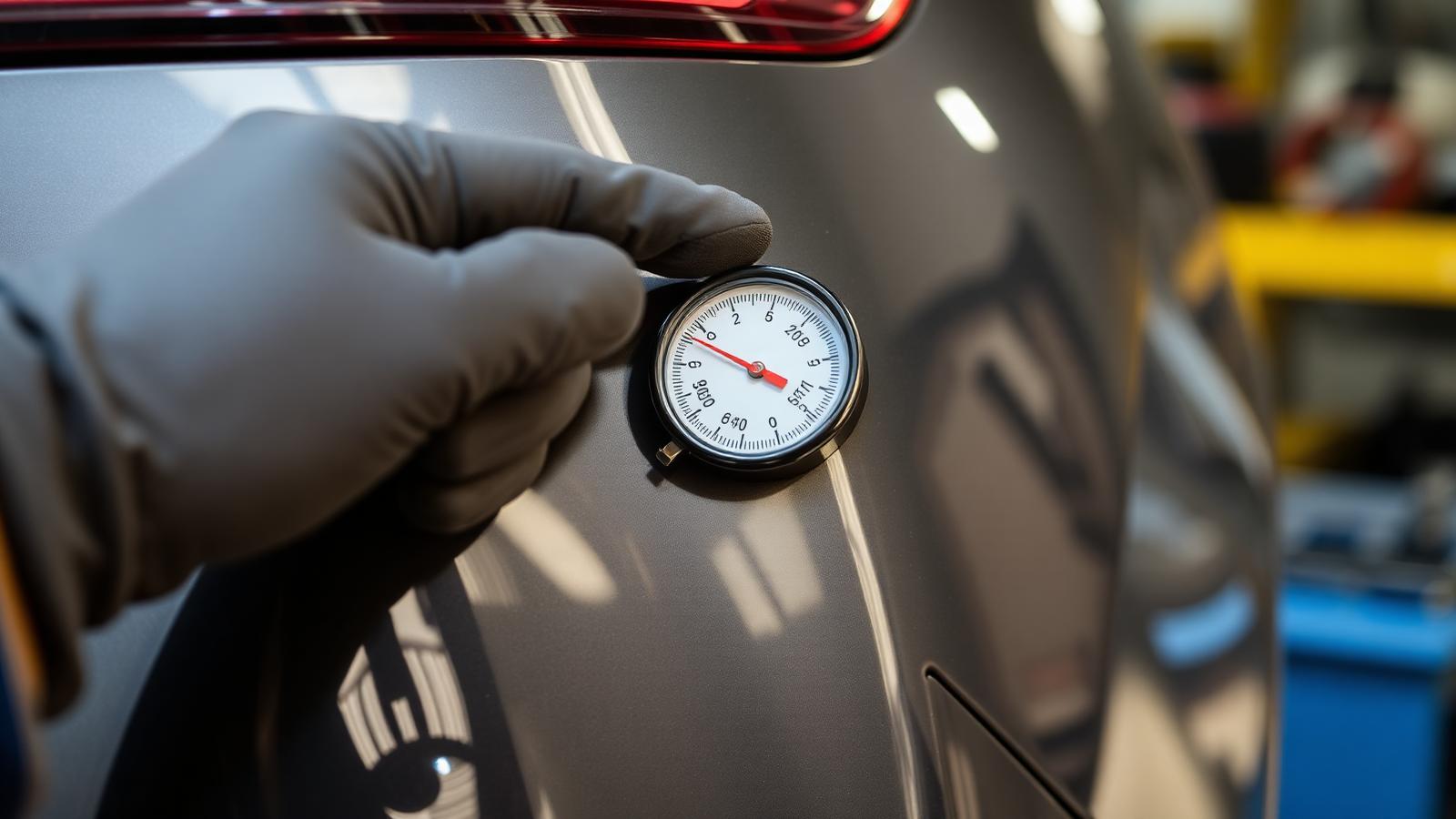
A test drive tells you how a car feels for twenty minutes on roads you chose, at a temperature the seller set, with a radio on. It is genuinely useful — and it is systematically blind to the faults that cost the most money. Every one of the five red flags below has been found on a Sydney car that a buyer had already driven and liked.
This is the short list our inspectors work from: the faults that recur most often and carry the biggest repair bills. If you only remember one thing from this article, make it this — all five hide from the exact things buyers do rely on, and all five show up in a structured inspection.
Red flag 1 — Repaired accident damage the seller never mentions
Panel repair done well is invisible to the eye. Modern waterborne paint and a competent panel shop will produce a finish you cannot pick in daylight, let alone under a carport. What it can't hide is thickness: factory paint sits in a fairly narrow band, and filler or a respray reads two to five times higher on a depth gauge.
Why it matters isn't cosmetic. Repaired structural damage affects crash performance, alignment wear, water sealing and — very directly — resale value, because the next buyer's inspector will find exactly what ours did. On a car with a repairable-write-off history that wasn't disclosed, you're also looking at an insurance and finance problem, not just a mechanical one.
- How it hides: perfect colour match, clean panel gaps, and a seller who genuinely may have bought the car already repaired.
- How we find it: paint depth readings on every panel, panel-gap measurement, checks for overspray in door shuts and under seals, and factory weld and sealer inspection.
- What it's worth: typically a 3–8% adjustment on value for non-structural repair; a deal-breaker where structural members or a written-off history are involved.
Red flag 2 — A transmission that's fine warm and failing cold
Automatic transmissions — particularly dual-clutch and CVT units — mask wear once they're at operating temperature. The seller warms the car before you arrive, you drive it for fifteen minutes on flat suburban roads, and it shifts perfectly. The shudder, flare and delayed engagement that a worn unit produces show up cold, under load, and on a hill.
| Symptom | When it appears | Typical Sydney repair |
|---|---|---|
| Shudder at 40–60 km/h light throttle | Cold, first 10 minutes | $3,000 – $7,000+ |
| Flare between shifts under load | Uphill, warm or cold | $2,500 – $6,000 |
| Delayed engagement into D or R | Cold start only | $1,500 – $5,000 |
| Harsh 1–2 shift with stored codes | Any time, needs a scan | Varies — valve body from ~$1,800 |
Repair ranges are indicative Sydney figures for common passenger platforms and move substantially with make and model. The reason this red flag sits so high on the list is the size of the number: a transmission is one of the few faults that can exceed the value of the car itself.
Red flag 3 — Oil and coolant leaks you can't see from above
A detailed engine bay looks reassuring and tells you very little. Leaks show underneath: rear main seal weep at the bellhousing, sump gasket seep, timing cover residue, power steering rack sweat, and coolant crust around water pump and radiator seams. From a standing position with the bonnet up, none of that is visible.
The cost spread here is wide and it's driven almost entirely by access. A rocker-cover gasket might be $350. The same volume of oil coming from a rear main seal means the gearbox comes out — call it $1,200 to $2,400. A head gasket on a European turbo motor is a five-figure conversation. Which is why 'a bit of oil under there, they all do that' is a sentence worth a proper look.
- How it hides: steam-cleaned engine bay, degreased underbody, and a car parked over a fresh patch of driveway.
- How we find it: underbody inspection on ramps or hoist with proper lighting, UV dye traces where needed, coolant pressure behaviour, and oil-level and condition checks against service history.
Red flag 4 — Fault codes cleared the morning of the sale
A $30 code reader plugged in the night before will clear a dashboard. What it can't do is reset the deeper data an inspection-grade scan tool reads: readiness monitors, pending codes, freeze-frame data, misfire counters, fuel trims, and DPF regeneration history.
The tell is a car with no dash lights but incomplete readiness monitors — which is the electronic equivalent of a fresh coat of paint on a wall you weren't meant to look behind. It means the ECU's memory was wiped recently and hasn't relearned enough drive cycles to re-report. On a diesel, a DPF that's been regenerating far more often than it should is a five-thousand-dollar warning sign the dashboard will never show you.
- How we find it: full ECU scan across every module — not just engine — including stored, pending and permanent codes, plus readiness monitor status and live data under load.
- What it's worth: depends entirely on the fault behind it. The value of the check is that it converts an unknown into a known before you pay.
Red flag 5 — Title and history problems attached to the car, not the seller
The fifth red flag isn't mechanical at all, and it's the one that can cost you the entire purchase price. Finance owing on the vehicle, a written-off record, a stolen report, or odometer readings in the registration history that don't line up with what's on the dash — all of these travel with the car, not the seller.
If a financier holds a registered security interest over the vehicle and the seller doesn't discharge it, the car can be repossessed from you. Your claim is against a private seller who has spent the money. This is a paperwork check that takes minutes and it is included in every inspection we do.
- Finance owing — the financier's interest survives the sale.
- Written-off vehicle register — affects insurability, financeability and value.
- Stolen check — the vehicle is recoverable by police and you are not compensated.
- Odometer history against registration records — the most common form of used-car fraud in Australia.
- Service history verification — a full-looking logbook with stamps that don't match dealer records.
What these five have in common
Every one of them is invisible to the two things buyers rely on most: a test drive and a clean, tidy presentation. Every one of them is found with method rather than luck — a gauge, a scan tool, a set of ramps, a cold start and a register search. And every one of them is cheaper to find before settlement than after, by a factor that usually runs into the thousands.
If you've found a car in Sydney, on the Central Coast, in Wollongong or Newcastle and you want these five checked properly before you commit, our inspector comes to the vehicle — usually same day if you book before 11am.
Common questions
Can a test drive find these problems?
Rarely. Hidden accident repair needs a paint depth gauge, cleared fault codes need a scan tool that reads readiness monitors and pending faults, undercarriage leaks need the car up on ramps, transmission wear usually only appears cold or under load, and title issues need a PPSR search. A test drive can't do any of those.
What is the most expensive fault you find?
Transmission failure and engine damage top the list on cost, but hidden structural accident repair is often the most consequential — it affects safety, insurability and resale simultaneously, and it can't be undone.
How long does an inspection take to check all this?
A comprehensive pre-purchase inspection runs roughly 90 minutes to two and a half hours on site depending on the vehicle, plus report time. Comprehensive and Elite reports are issued on site; Essential is same day.
Do you inspect the car at the seller's address?
Yes. We're a mobile service — the inspector comes to the vehicle anywhere across Greater Sydney, the Central Coast, Wollongong and Newcastle, so the seller doesn't have to move the car.
What happens if you find one of these red flags?
You get a call from your inspector before the written report is issued, so you can act immediately. The report then documents the finding with photos, severity and an indicative repair cost you can use to renegotiate — or to walk away with evidence.
Lock in your inspection
Book a mobile pre-purchase inspection at the seller's address. Same-day slots across Sydney from $199, with a written repair cover on Elite (30 days / up to $3,000).
Mobile inspections near you